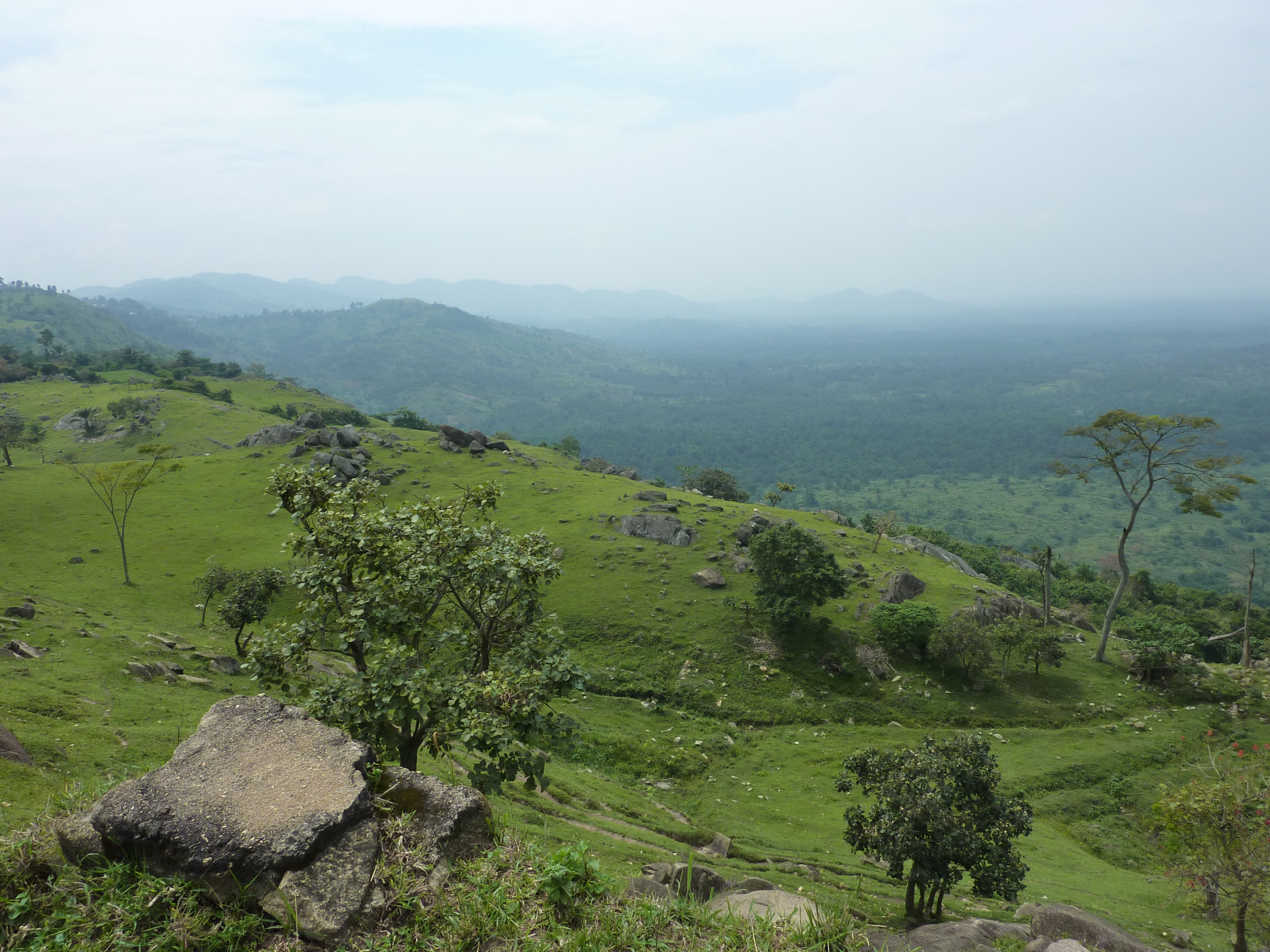
We realized that Congolese in Butembo don’t seem to break for lunch. We had the driver stop so we could buy some roadside peanuts and some bananas. Then it was quickly off to the (in English) University of the Great Lakes of Butembo or ULPGL/Butembo. There are other locations of ULPGL, much like the University of Southern California.

We were warmly met by the Rector, Prof. Dr. Kambale Kandiki Valere and led to his office where he very formally welcomed us with a prepared written speech.

Presentation of a gift by the Rector

Presentation of a gift by the Rector

The school is a Christian based school that provides seminary training, but it also provides training for careers such as Economics, Business Admin, Health and Community Development and Teaching. This is consistent with an active church that provides social services in lieu of the government. This is where James Kataliko is earning his degree.

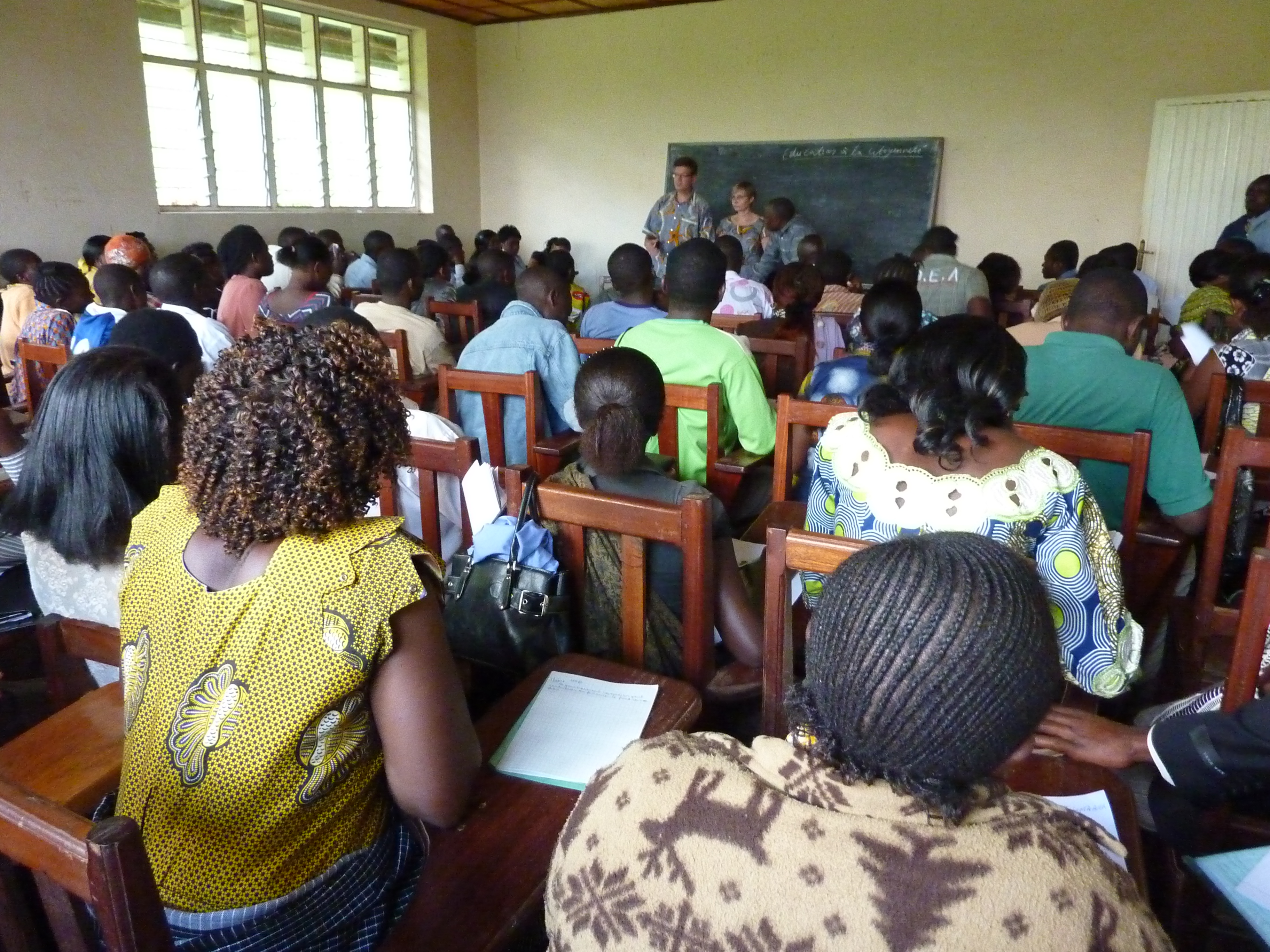
The rector took us to a large lecture room where 100 students were waiting.

Universite Libres des Pay des Grands Lacs de Butembo (ULPGL / Butembo)

Universite Libres des Pay des Grands Lacs de Butembo (ULPGL / Butembo)

After the usual greetings and introductions, we co-lead a lecture on Canadian charity rules and their implications for African projects. Michael started with a macro view of how income tax works and the concept of getting a tax break when giving to a registered charity.

Michael explaining Canadian tax policy

Michael explaining Canadian tax policy

Brenda discussed the rules and regulations facing charities working in Africa.

Brenda discusses Canadian charity law

Brenda discusses Canadian charity law

Michael came back on to discuss the value of a well documented plan when requested support. After our 30 minutes talk, we had a lengthy Q&A.

Their greatest interest was how to find someone in Canada to sponsor their projects. Michael explained how a big part of searching for money, in business as well as with charitable work, is the hard work of locating a suitable sponsor to ask. Then, you need to be prepared with a well documented plan. The concept of having a well documented plan seems a foreign concept here!

Dr. Kambale Kandiki Valere of ULPGL / Butembo

Dr. Kambale Kandiki Valere of ULPGL / Butembo

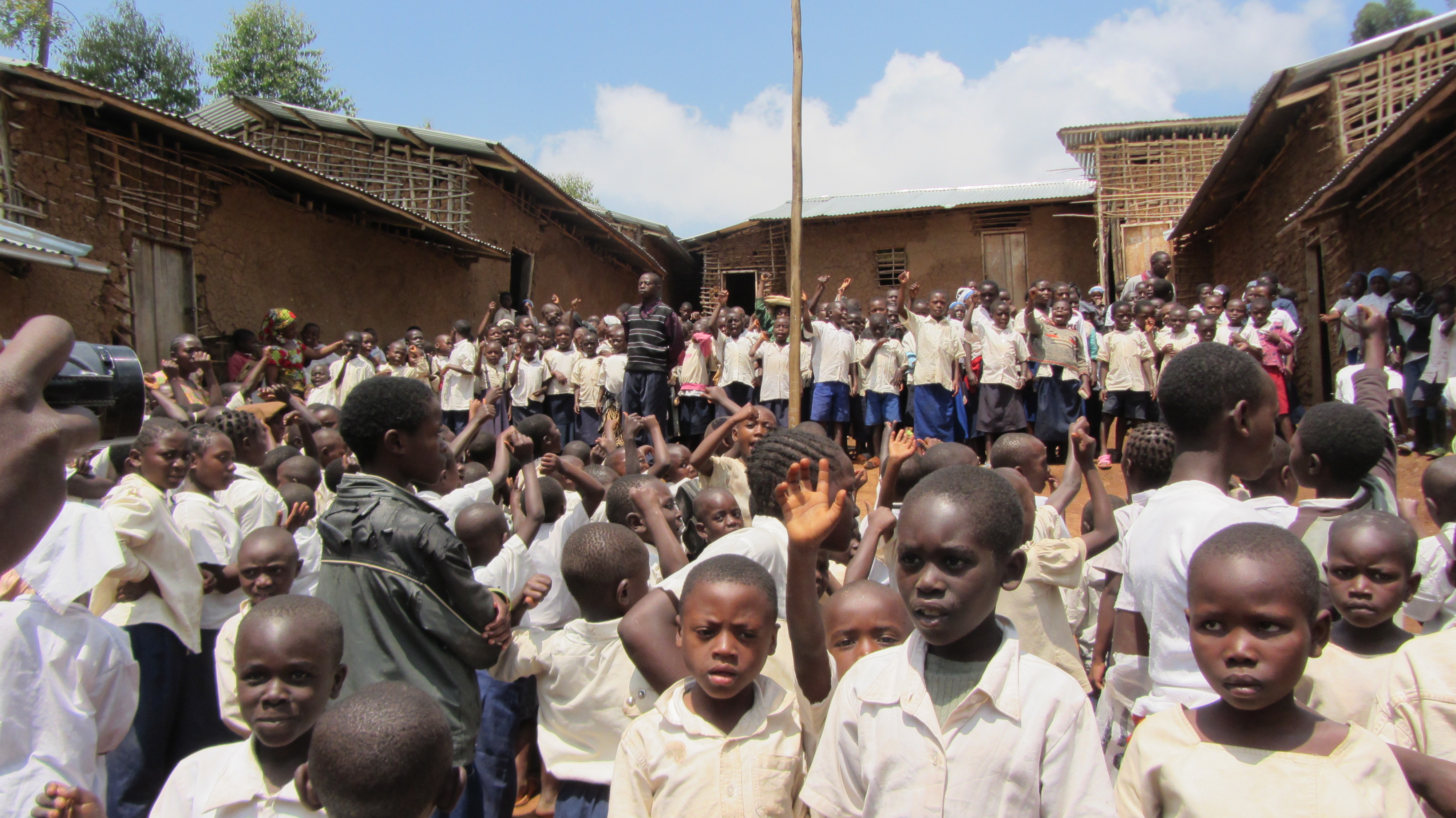
The site and sound of 400 primary school children singing Karibu (Welcome) was amazing. Video of our initial welcome.

Being welcomed at the CSCODI school for orphans, Butembo

Being welcomed at the CSCODI school for orphans, Butembo

CSCODI school kids

CSCODI school kids

We were escorted and feted down a road to the school where everyone lined up for a school assembly.

Being escorted to the school

Being escorted to the school

Being followed down the road to the school

Being followed down the road to the school

Getting organized

Getting organized

Songs of welcome continued and they sang a solemn national anthem.

Preparing for the national anthem

Preparing for the national anthem

Video of children gathering

As always in Africa, we were asked to give greetings and to say a prayer for them which Michael (as the man, as always) gave.

Speaking to the assembly

Speaking to the assembly

These children don’t have any other school they can attend. The school finds a way to pay for the kids in the orphanage, but the majority of orphans and students are being supported in church family homes. Fees are $30 per student per year, but many families still can’t pay that and the 13 teachers are way behind in their pay of $1 per day. It is hard to go after the foster parents when they are already stepping up by housing the orphans. It didn’t help the school to have thieves steal some of their supplies.

Visiting a classroom

Visiting a classroom

Teacher with his class

Teacher with his class

We met with the Head Master to learn many of these details before visiting some class rooms which were back in session. Greetings once again were obligatory. In one class, four small kids had to stand in the back because they were so crammed in and there were no seats.

The small kids are without desks or seats

The small kids are without desks or seats

The school operates 8:00 to 1:00, closed in July and August.

We left the school to visit a nearby CSCODO Health Clinic just after school was out. The children from the orphanage are fed lunch here as it is a long walk back. This clinic serves the kids from the school but also some special needs. We were introduced to four very young girls who had been raped and ostracized as a result. It is heart breaking to hear how they are treated.

Brenda greeting the younger kids at the clinic

Brenda greeting the younger kids at the clinic

Four young girls

Four young girls who were raped, ostracized and taken in by the Clinic

After leaving the orphanage, we visited a project sponsored by CSCODI. Five orphans are working with old manual Singer sewing machines making six pairs of overalls per day. The profits are used to support the orphanage, but this also provides training to develop an employable skill. We are bringing home a pair of overalls so people can better relate to their program.
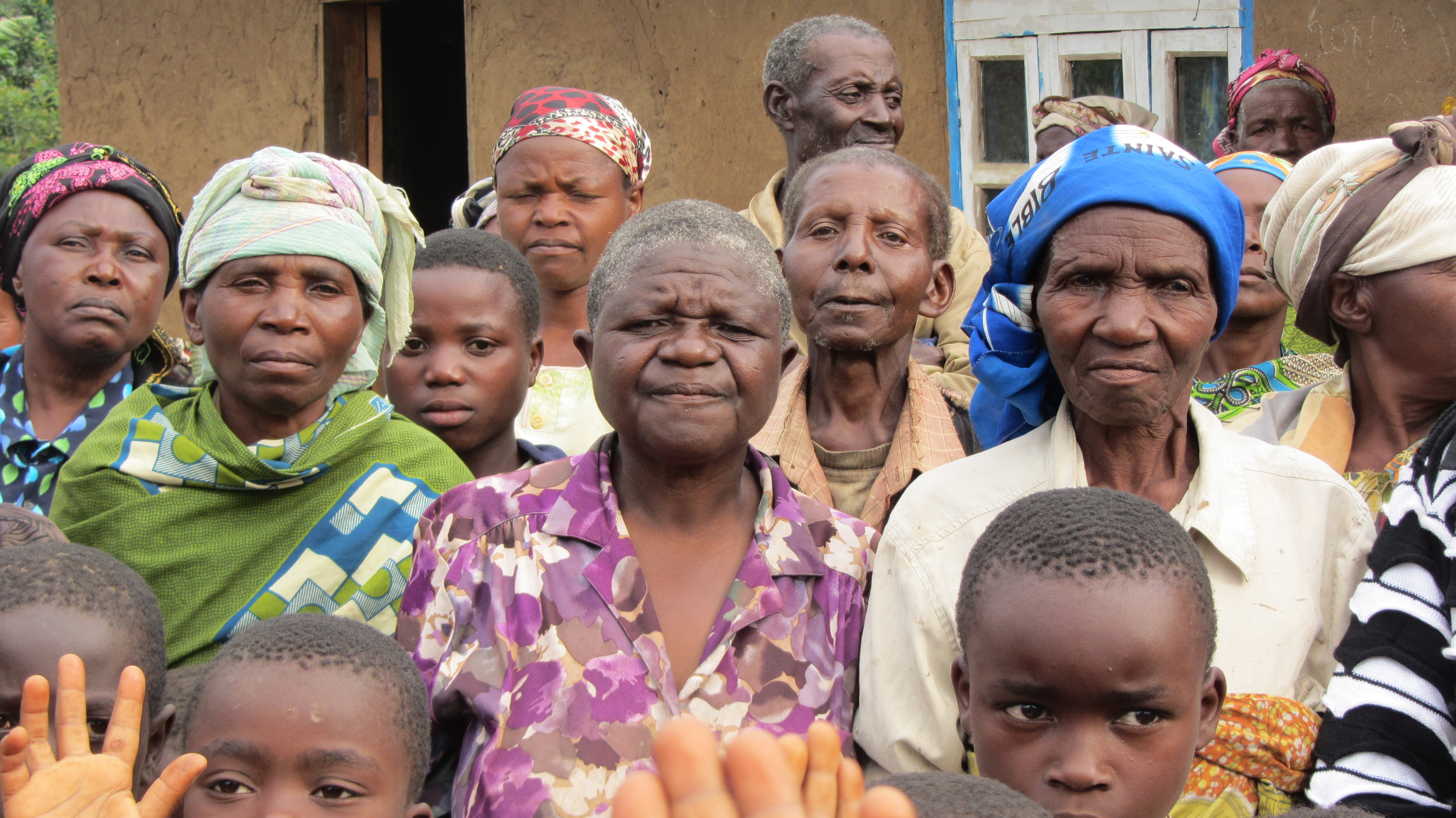
We met Kahindo at the orphanage. She is a widow with AIDS, having been infected by her husband who was a truck driver. Once her husband died, his family came and took all that she had, claiming it was theirs, and kicked her out of the home, even though she has three children with her. (Once again, I am grateful for my wonderful in-laws who are more than a few steps up from these ones).

Kahindo Mama Nely

Kahindo Mama Nely

She has now returned to her family, but she is now helping to train people about AIDS so they don’t kick others out of their home. It sounds very similar to the work of Healing Streams concerning rape victims.

Kahindo talked of how people refuse AIDS tests because it is personally better for them to not know.

She meets with 17 PWA (Persons With AIDS) and collectively they teach people to stay celibate or faithful and to get tested. She would appreciate a sponsor so she could do more. We gave her some support, but can only wish we could do more.

We are not even half way through this day! We will add pictures when we have the technical ability.

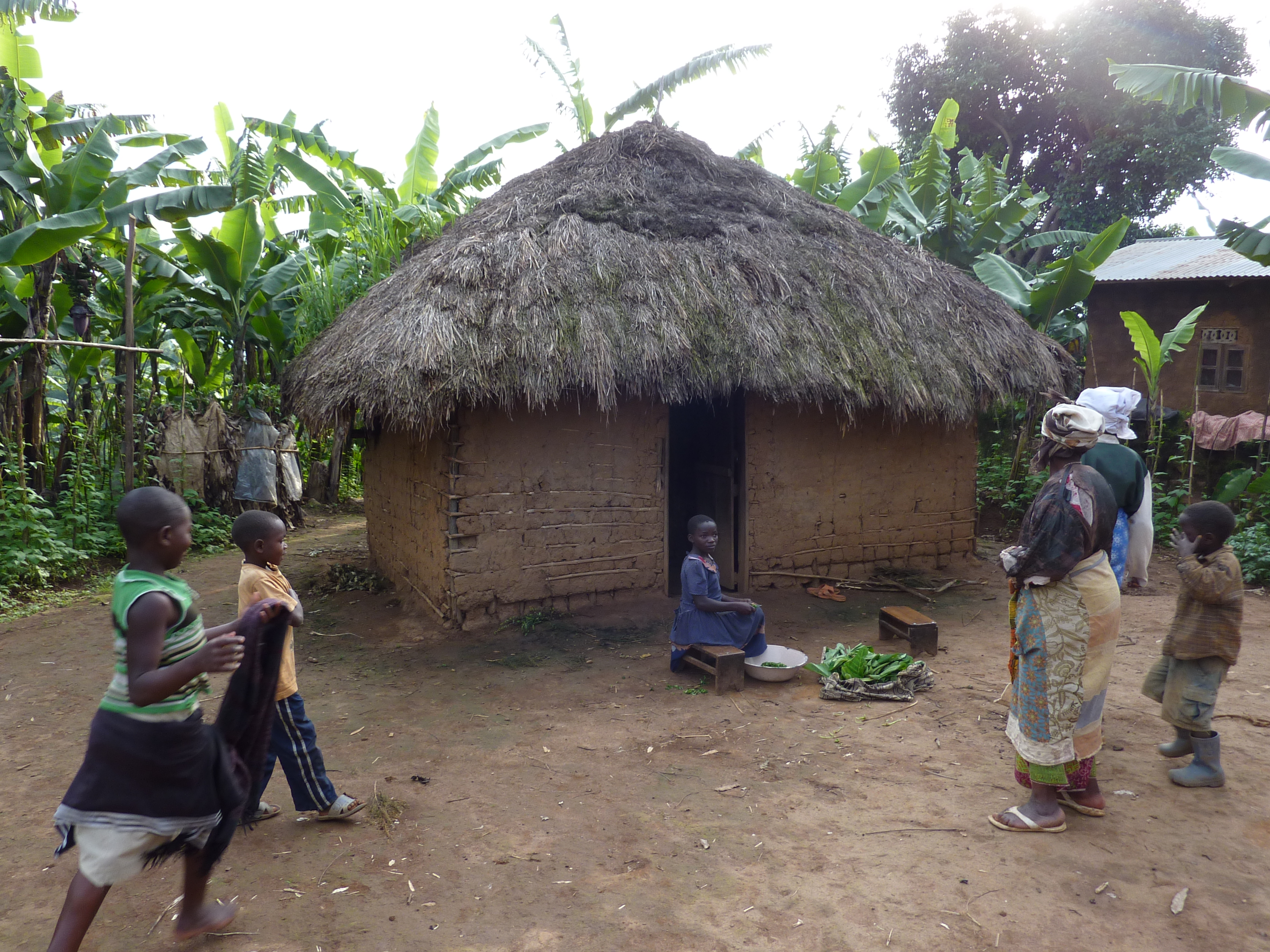
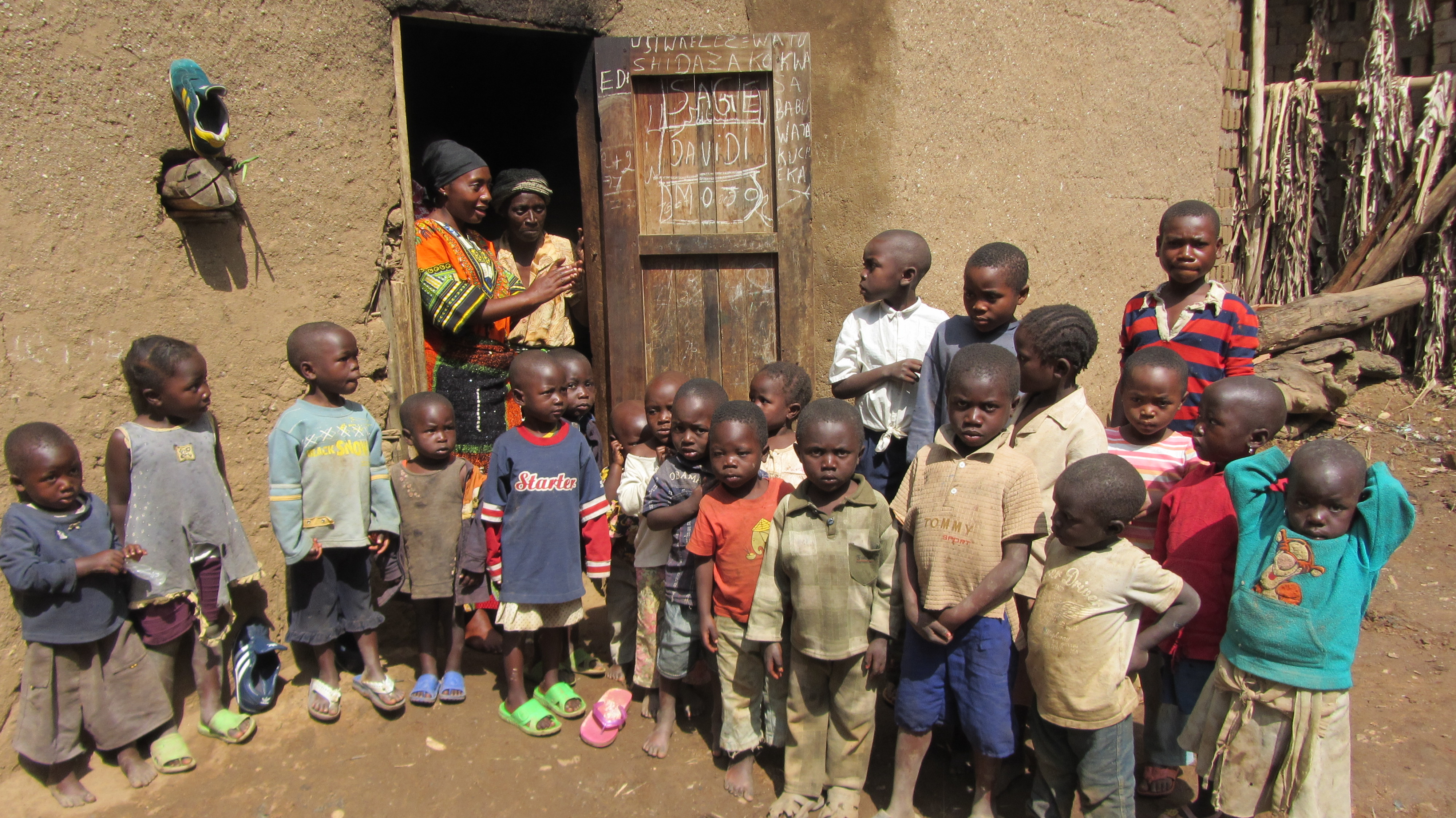
We were greeted at the orphanage with the small kids all lined up with women singing a song of greeting accompanied by drums. We entered what they called the prayer hall, but the single room is also known as the bedroom for 15 younger kids who sleep on tarps directly on the floor. Inside were 25 or so teens and young adults (and drums) enthusiastically singing songs of Karibu (or Welcome). We gave greetings and were asked to say a prayer for them.

Greeted on our arrival

Lined up to greet us on our arrival

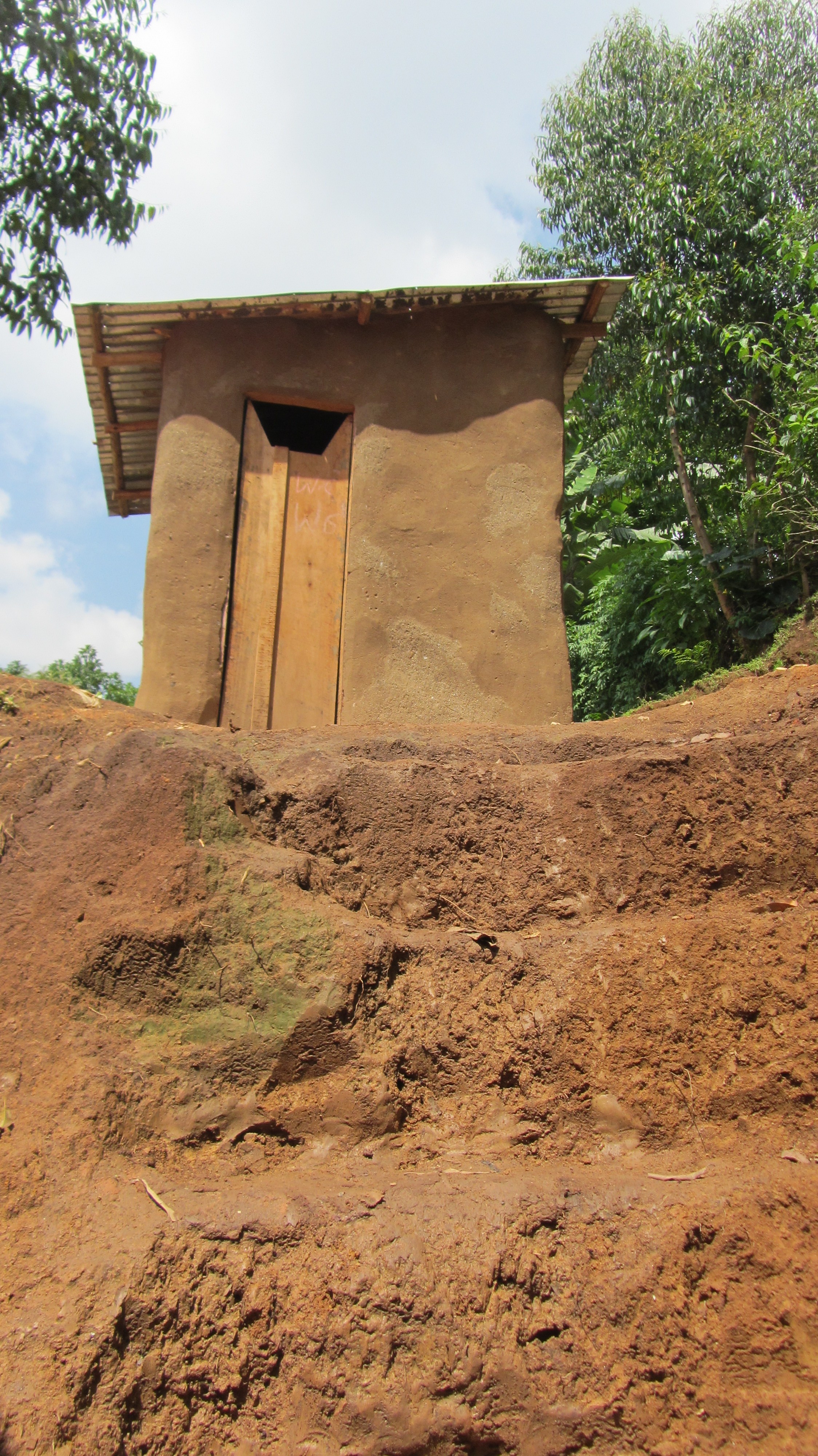
We toured the grounds. The outhouse is up such a steep incline, we have no idea how the little kids can do it.

How do they climb this at night?

How do they climb this at night?

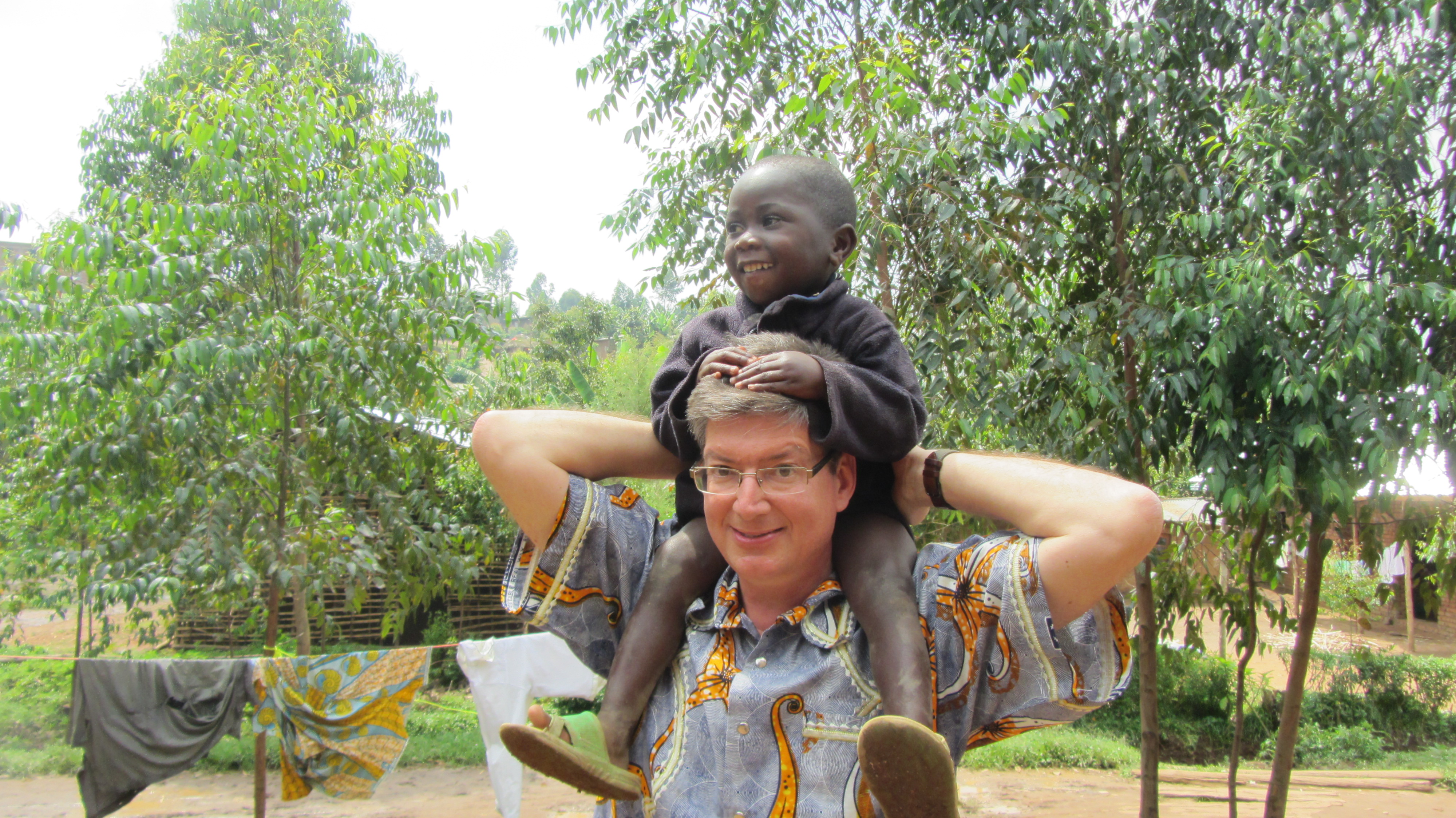
Shoulder riding seemed new to the orphans

Shoulder riding seemed new to the orphans

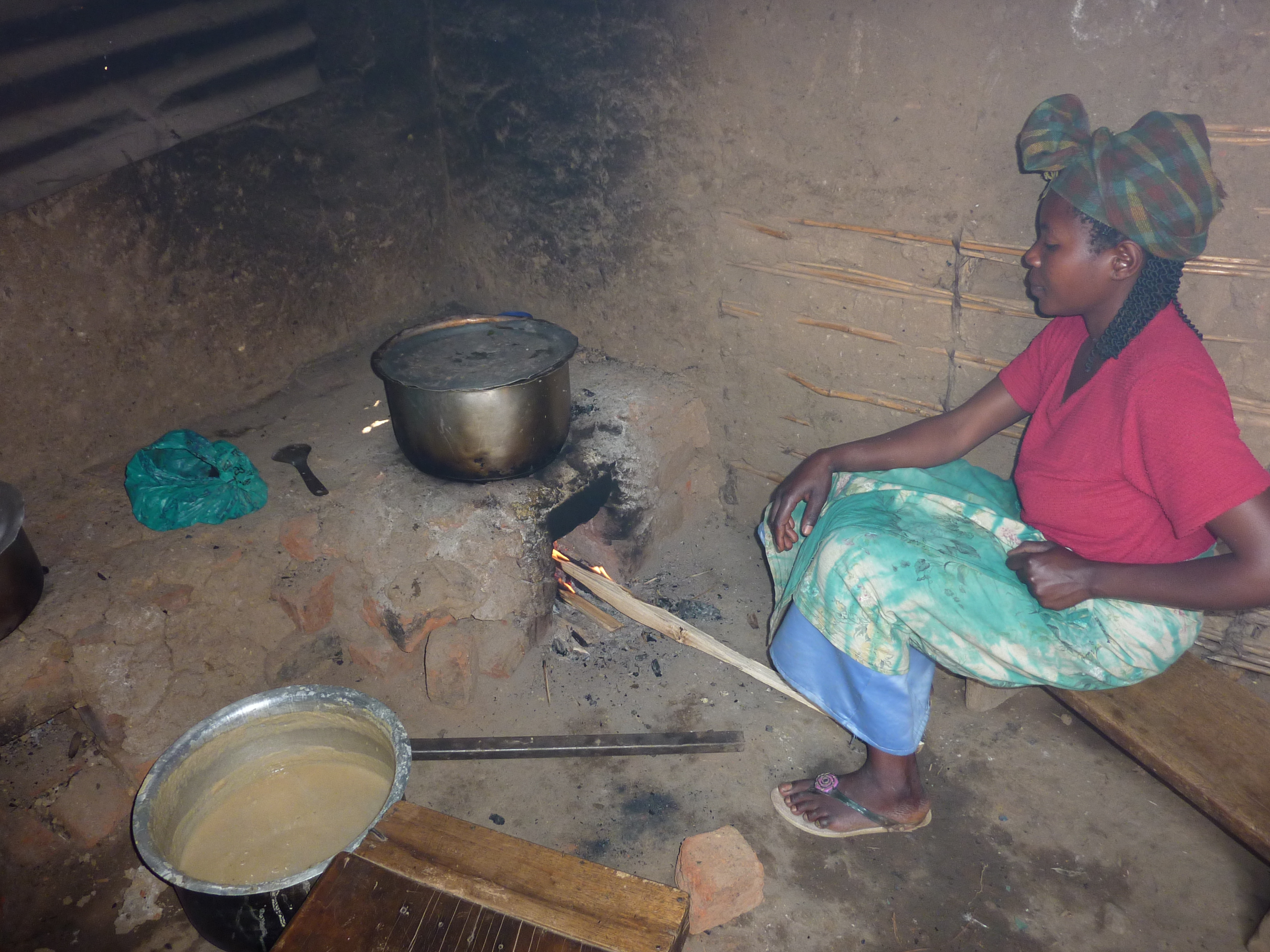
The kitchen was the size of a small closet, 4 feet by 6 feet. There was a wood fire and small grill to support a cooking pot.

The Kitchen

The Kitchen

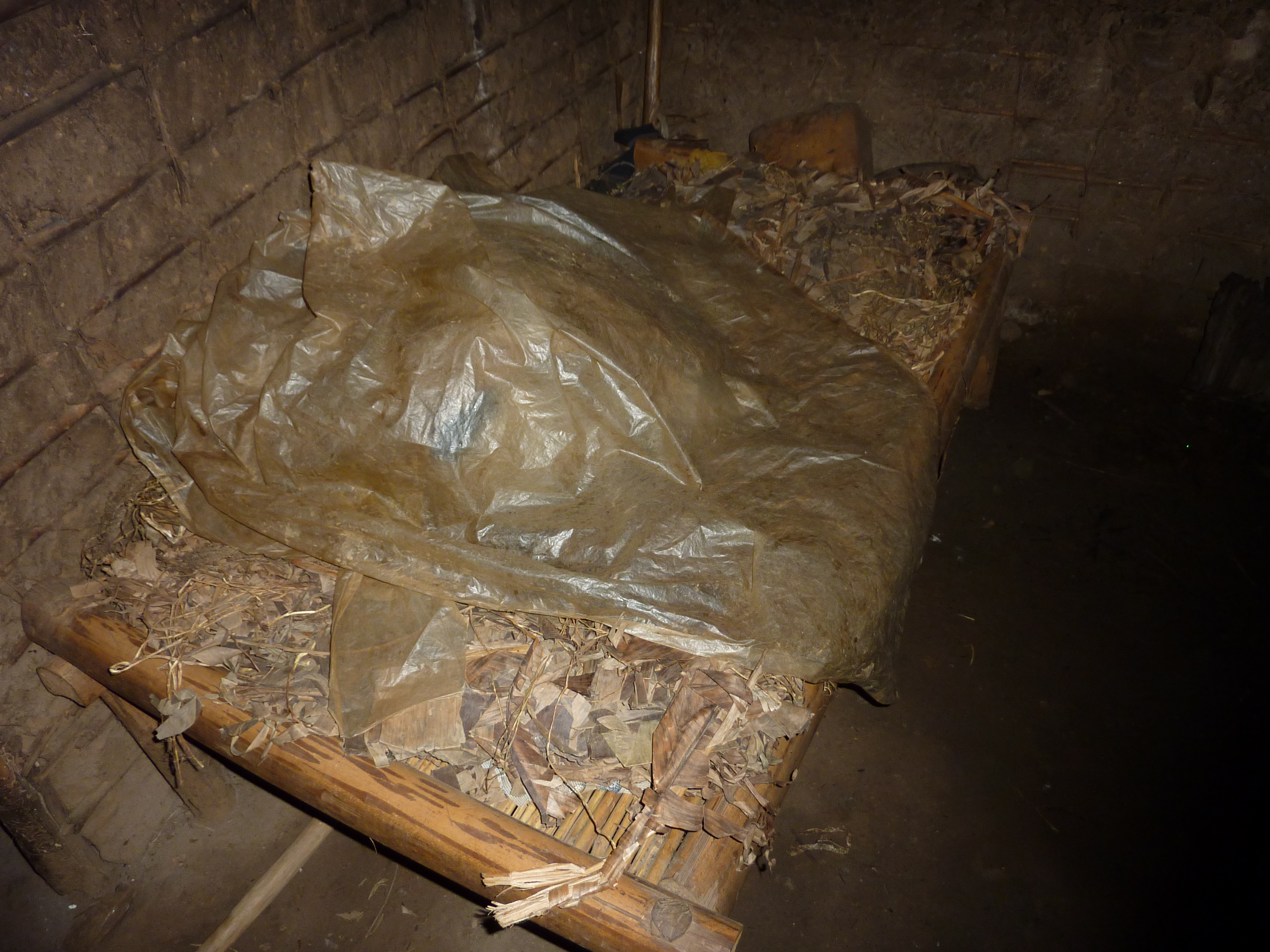
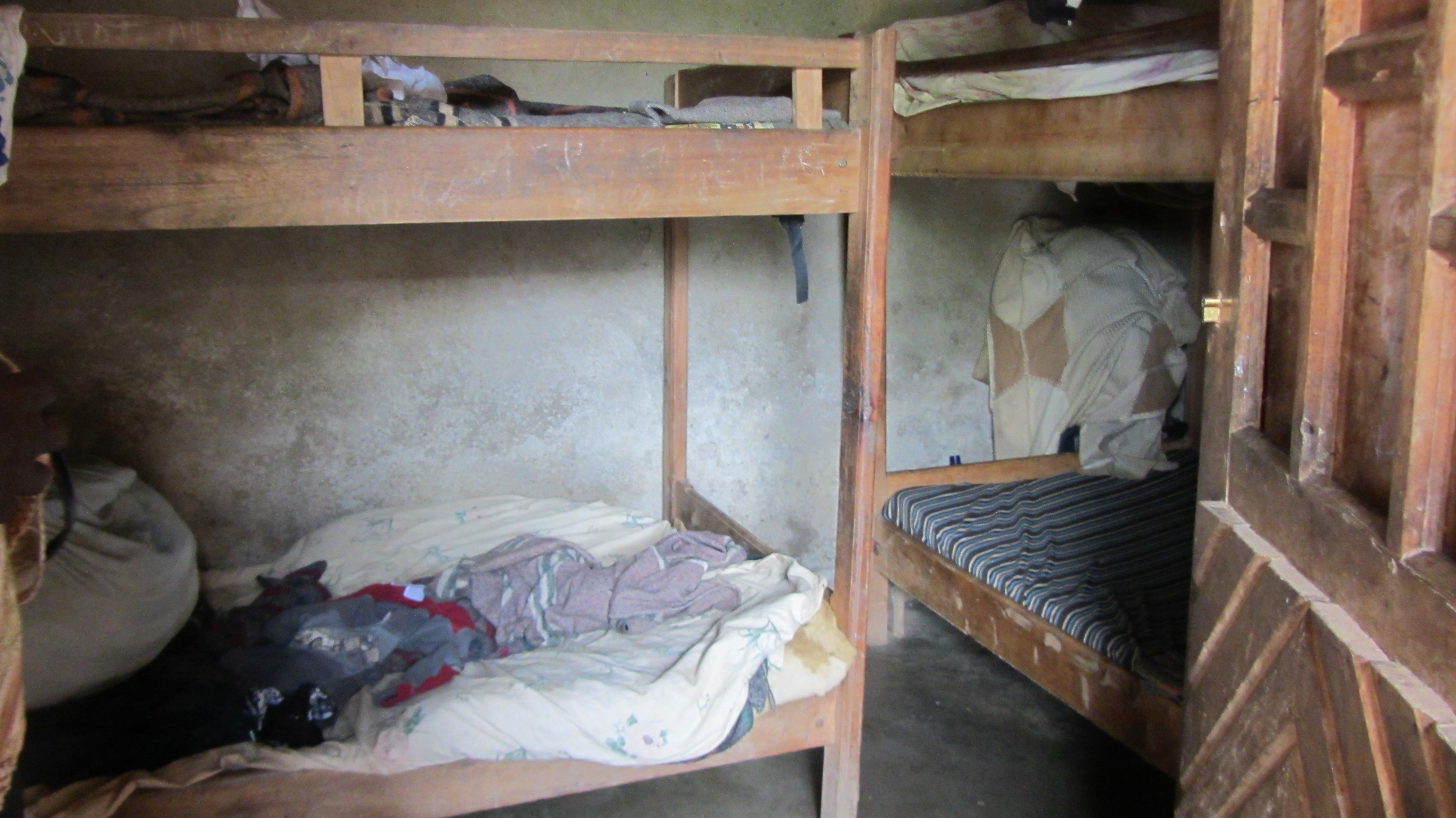
The first bedroom with two bunkbeds each with two single beds was for older boys but sleeps 7, not 4. The second bedroom for small children had the same configuration but slept 9 plus an adult sitter. The sitter would be a local volunteer who rotated evenings. The balance of 15 at the orphanage sleep on the floor in the prayer room.

Bedroom for nine plus a sitter

Bedroom for nine plus a sitter

The kids were so well behaved when asked. They quietly and obediently ate their maize porridge, sharing their plate with a friend because they didn’t have enough plates for everyone. But they would also play and fool around too like any child would do.

Lunch time

Lunch time

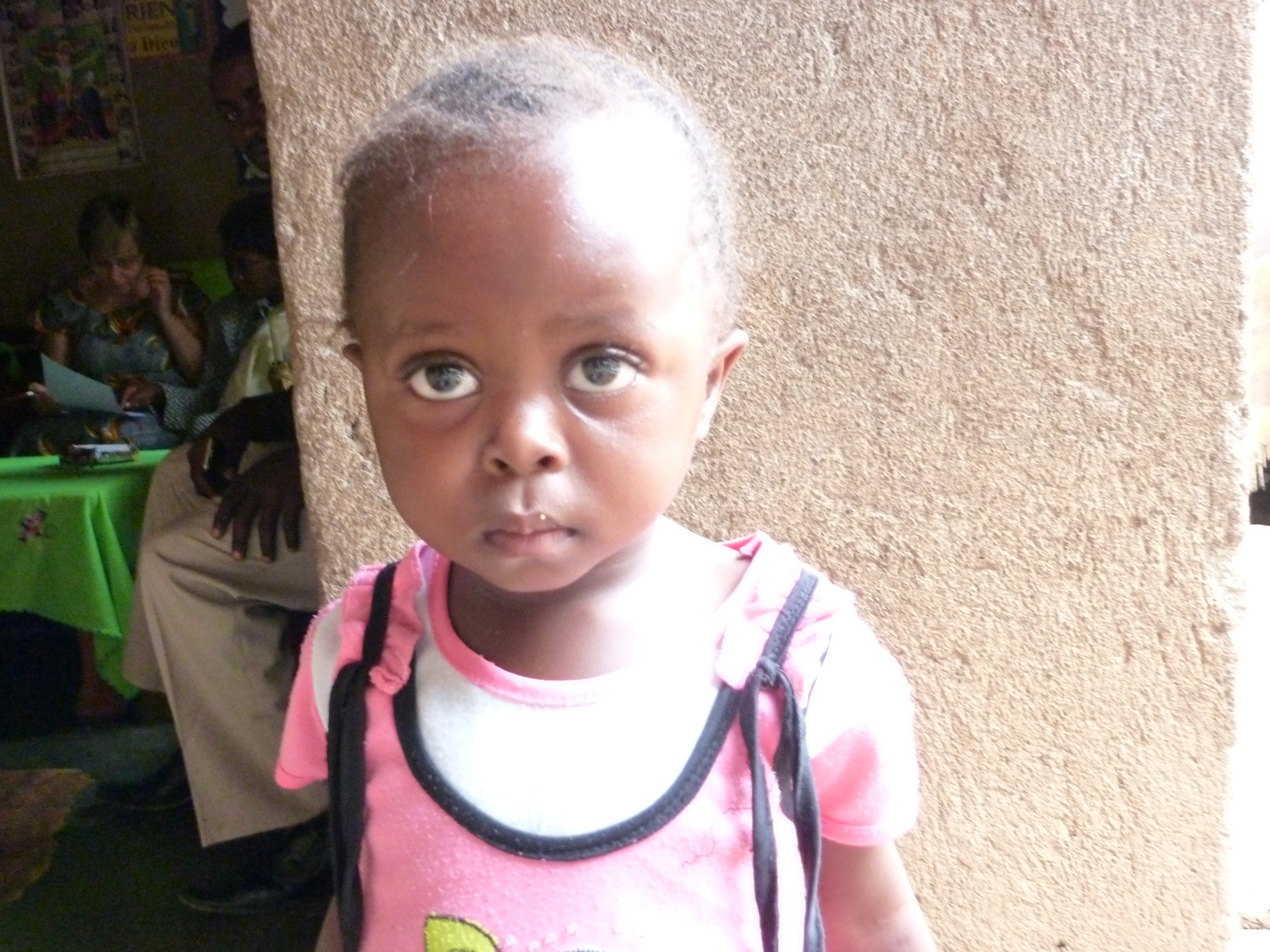
Cutie

Cutie

The children come from three main sources of parental deaths: war, children of rape victims and HIV/AIDS.

The efforts of Mama Dorcas and other volunteers is so amazing when they have so little. We talked about what we could provide. The list was long. Various foods, kitchen equipment, a sheet of metal for a leaky roof: there were 25 items on her page.

Mama Dorcas with an orphan and a helper

Mama Dorcas with an orphan and a helper


Video of our welcome at the orphanage.

Video of some of the rooms at the orphanage

We will go to the market with them tomorrow to buy things. We are grateful for Richard and Joyce Lewchuk of Glencairn MB who have financially partnered with us in support of this orphanage. If you have it on your heart to make a pledge of any amount, let me know today (e-mail or Comment) and we will spend that pledge at the market tomorrow morning (7 hours ahead of Ontario) on your behalf. We have a financial cushion of about $1,000 we can dip into. (There aren’t any ATM’s around as much as I’d like more than that). Unfortunately, we can’t give out tax receipts.

Bishop Ise is in charge of the Anglican diocese of North Kivu north of Goma. The diocese runs 120 schools, 20 health centres and a dental clinic. The involvement of the church reminds us of the role churches have played before we in Canada grew so (over) dependent on the government. He has a personal passion for working with the military as he told stories of how he has preached to thousands of soldiers with many weeping and asking for forgiveness.

Bishop Isesomo Muhindo

Bishop Isesomo Muhindo

We were blessed to meet Bishop Ise as our first stop this morning. Bishop Ise first met Mama Dorcas in 2006 when she was caring for many orphans in a small house nearby and he started helping her. He is now the local president of the organizing committee for the orphanage.

At the Anglican diocese in Butembo, North Kivu province

At the Anglican diocese in Butembo, North Kivu province

Brenda Ben with Bishop Isesomo Muhindo

Brenda Ben meeting with Bishop Isesomo Muhindo and Mama Dorcas Mbambu

With James and the carload of CSCODI members more than willing to accept our invite for breakfast, we needed to inform the Kikyo Centre of our extra guests. The Manager on duty immediately had a request for us. Would he be able to talk with us so he could share his idea. He wound up explaining to Michael his idea of building a hotel with a team of others. This would provide apprenticeship opportunities and jobs. What they really needed was a sponsor, oh, and $10,000 that would be paid back from their profits. Michael spent the next half hour telling him how to write a business plan, to Google “microbank Congo” to learn about loans, the importance of some equity and discussing some factors they should know such as potential traffic, competition, pricing and vacancy rates.

Congolese entrepreneur and manager of Center Uhai Kikyo

Congolese entrepreneur and manager of Center Uhai Kikyo

The teens in the youth centre were obviously most concerned about getting jobs. They said they had some ideas for making jobs, but they needed a sponsor. Michael explained in much the same way that a sponsor needs to fully understand what the proposal is, how it will work and how it make money. What they needed was a business plan.

The youth asked if there were similar groups in Canada. We said yes, in some similar ways. They asked if we could connect them to another youth group in Canada to sponsor them. We said no promises, but we would inquire. It is an obviously energetic but thoughtful group.

We think it would be great if a church youth group was willing to correspond with them and sponsor them for any amount a quarter. Even $20 per month would go a long way here. A business opportunity can be as little as buying a used treddel sewing machine. Western Union can transfer money to Congo but with minimum fees, money should be sent in larger batches. James Kataliko can be an excellent agent for CRA purposes if needed.

Would you consider getting involved with these teens?

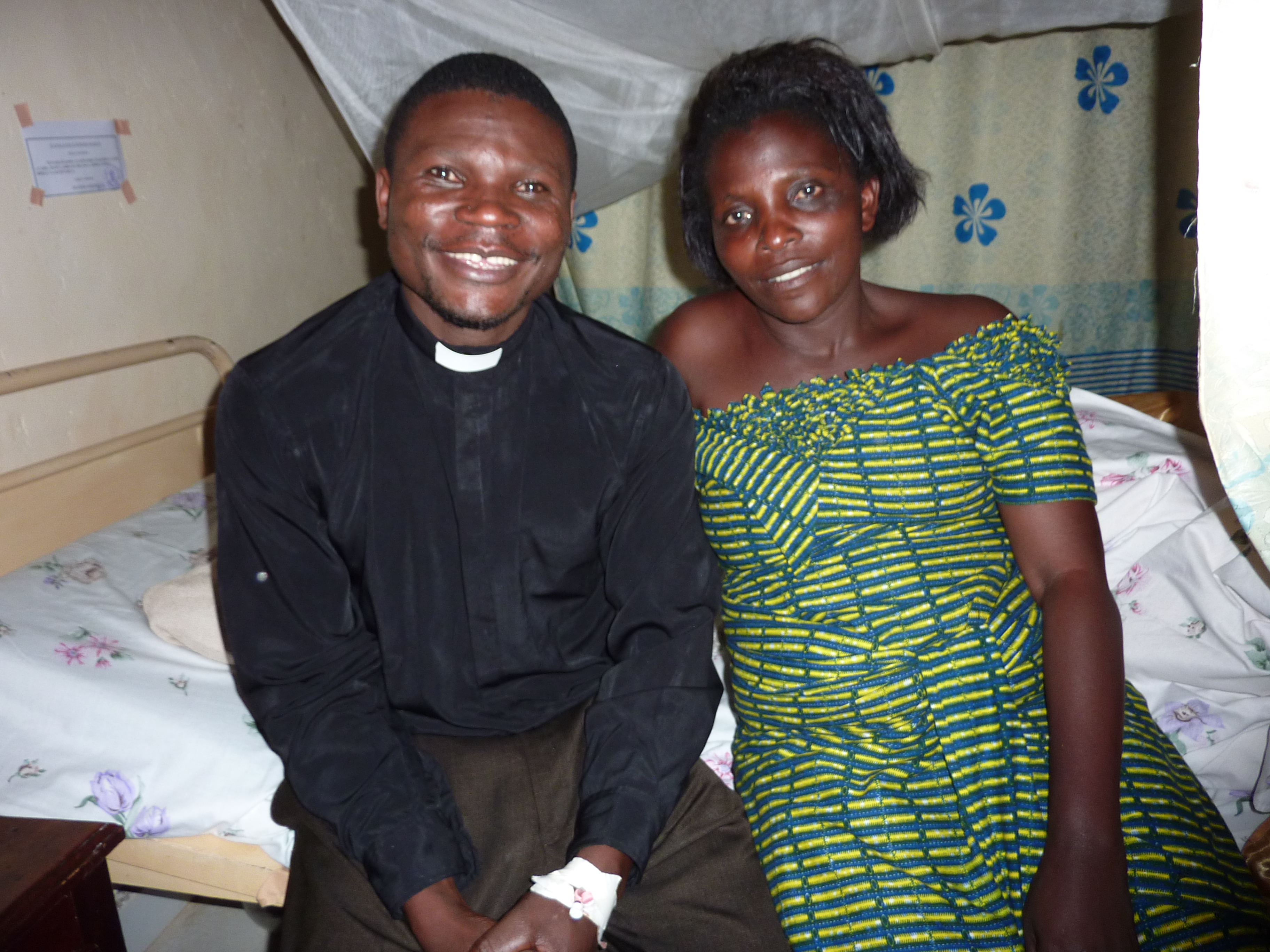
James and a fellow CSCODI worker met us at the Kikyo Centre and we learned the unfortunate news that Dorcas was at the hospital with her ill husband. Patients are not fed by the hospital, so family needs to be nearby. We wanted to talk with her and others with CSCODI about the priorities at the orphanage which we could best help with. With our hired car and driver, we went to meet her husband at the hospital. He is a Baptist minister (CBCA) and president at a nearby Bible college. He is recovering well but it undoubtedly was a huge encouragement for him.

Rev Kasereka Kiharami Emmanuel and his wife Dorcas

Rev Kasereka Kiharami Emmanuel and his wife Dorcas

James then took us to a meeting for local youth. He is the leader but has ten volunteers to help lead what could be described as a youth drop in centre. They teach the youth about issues such as teenage pregnancy, drug abuse, the menstrual cycle and AIDS. Did I say this was in Butembo and not in Waterloo? James asked us to say a few words and it turned into an hour long Q&A. There were about 50 teens. Their main focus was how to find a job. Several wanted to marry our similar aged daughters. Michael said they would have to come to Canada to woo them.

Michael speaking to the youth

Michael speaking to the youth

Butembo youth centre

Butembo youth centre

We invited our car load (5 including ourselves) to the Kikyo Centre for dinner. I’m told that Congolese never turn down free food. At the Centre, Saasita (Head of the School for the Orphans as well as the new CSCODI Women’s Microfinancing program) plus two other women (who all must have heard about the free food). We had met Ruth in 2008 and notably Brenda was excited to see Ruth and her one year old baby. We brought Saasista clothing for her baby (she was pregnant in 2008 and it was an unfulfilled Brenda promise to send a baby gift) plus a new camera we bought for the microfinancing program. They idea is for Saasita to be able to send photos of women seeking an initial loan so there can develop a connection with the original funder.

Dinner in the Kikyo Centre

Dinner in the Kikyo Centre


There will be a totally jam packed day tomorrow. James has us fully booked.

Dr. Philip Wood took us to a taxi station early this morning and negotiated the fare for us. The standard fare to Beni is $20 each, given 6 passengers in a small Toyota. We purchased the entire taxi for $120 plus another $30 to continue through to Butembo. The driver must have won the lottery as he was handing out 500 franc notes ($.55) to a throng of fellow taxi drivers.

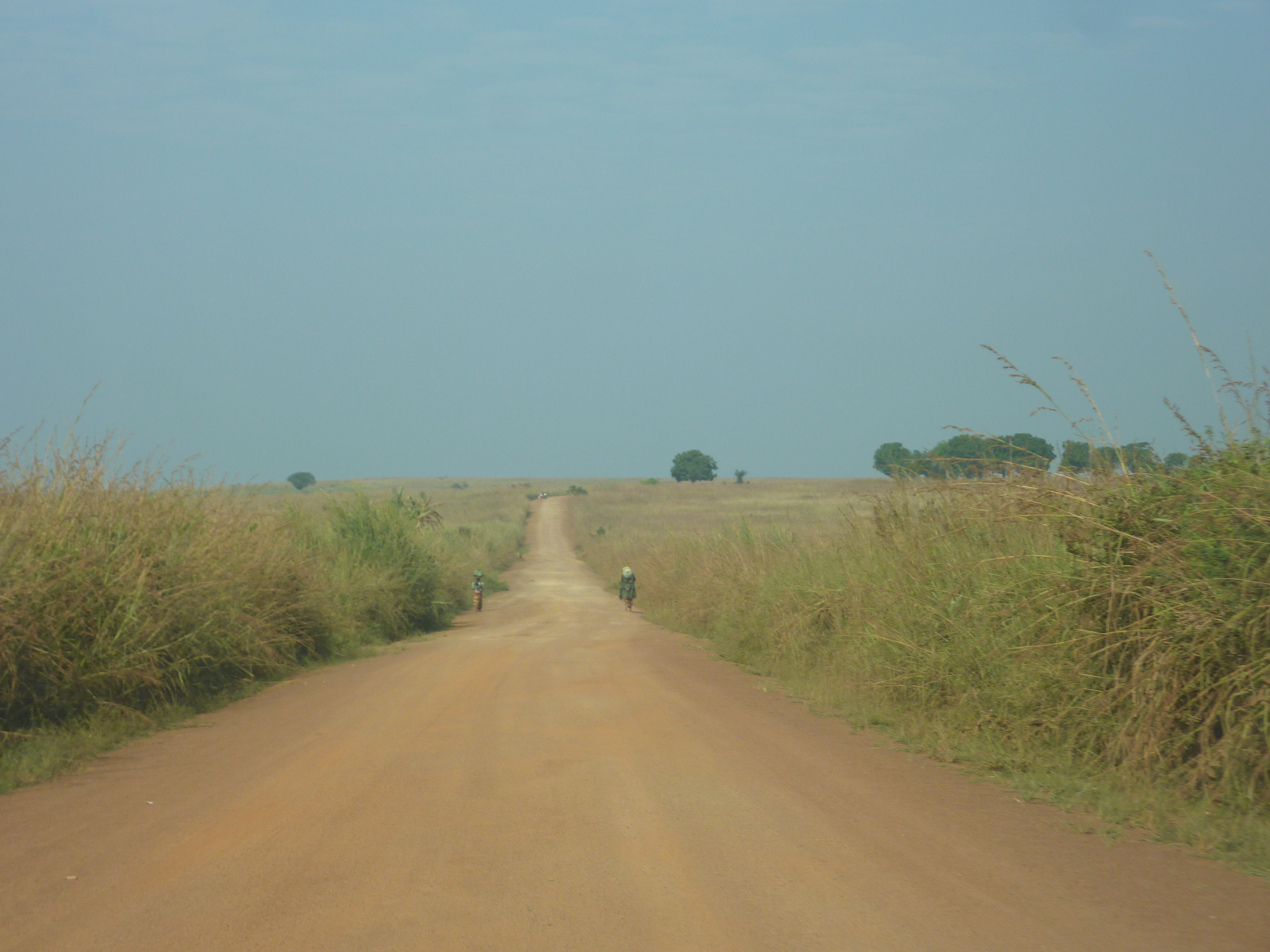
The area around Bunia is a flat grassland.

Driving south from Bunia

Driving south from Bunia

The vegetation gradually became thicker until a jungle would be a better description.

Leaving the grasslands

The benefits of being male in Congo are obvious. The driver, taking advantage of an empty trunk, stopped to buy charcoal which he later dropped off, presumably for a profit. Michael and the driver walked to the back of the roadside home and relieved themselves in what was effectively in the back yard. Michael felt rather obligated to give the breast feeding mother who was sitting a corner some francs for the privilege. Brenda needed to grin and bear it for some time to come.

Sorry for my intrusion!

Charcoal packaged and ready for sale

Charcoal packaged and ready for sale

We soon hit a beautiful paved road (which likely saved Brenda), courtesy of the Chinese. And what a beautiful road it was, better than any non-400 series Canadian highway. 60 km long, we zipped into Beni and stopped at the Hotel Beni to make a reservation for Saturday night.
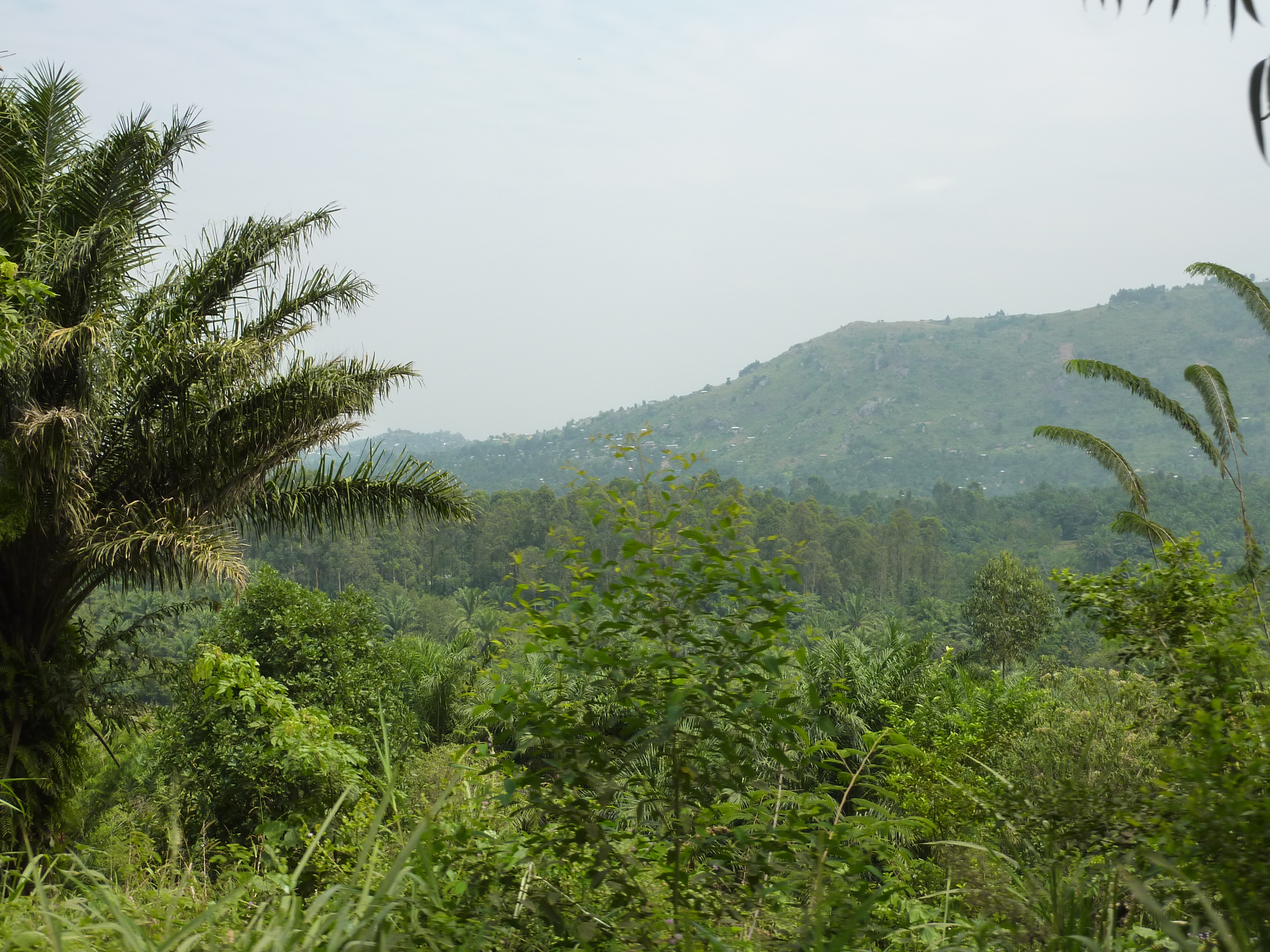
On leaving Beni, the road immediately reverted to Congolese standard. The road thereafter to Butembo was rocky and rutty and we typically could only manage a top speed of 35 km/hr, slowing right down for the massive pot holes.

But what a beautiful drive! Beni to Butembo increases in elevation quite a bit, following a high ridge. From this ridge and west, rivers flow to the Congo River and the Atlantic. On the east side of the ridge, water flows to the Indian Ocean. Water in Bunia flows to the Nile and the Mediterranean. This area is the crown of Africa.

Beni to Butembo

Beni to Butembo

Beni to Butembo 2

Beni to Butembo 2

We stopped at a roadside fruit market to buy pineapples for the orphanage, with the muzungu rate of 3 for 1,000 francs or $.35 each. We were mobbed by vendors wanting to sell their pineapples, but who to choose from when they are all identical! Once in the car, Michael was cajoled to buy some bananas and got back out of the car to do so. The woman literally did a Happy Dance once she got her money.

Brenda choosing pineapples

Brenda choosing pineapples

After the Happy Dance

After the Happy Dance

Approaching Butembo

Approaching Butembo

A seven part video of the drive.

We soon settled into a beautiful room in the Centre Uhai Kikyo in Butembo, and waited a short while for James Kataliko to arrive.

Seeing Nancy Wood standing at the airport terminal the moment we got off the plane was a wonderful site. Our journey to Bunia was uneventful, although Michael thoroughly enjoyed sitting in the co-pilot seat of the Cessna Caravan and talking with the pilot throughout the flight from Entebbe. It was interesting to see how the pilot steered around storm clouds and to discuss how he came to his decisions. As always, the sky was completely clear over Lake Albert, part of the Great African Rift Valley.

Arrival in Bunia

We stopped in at the local airline office (CAA) and determined a new plan (yet again). It was good to see the road construction underway. (Will it continue after the election?) We learned that CAA will shutdown next week for at least two days to celebrate the presidents inauguration. (Or they anticipate trouble when the results are announced. Take your pick.)

In front of the CAA office, Bunia

Our new plan is to hire a taxi first thing in the morning and drive to Butembo. It should be a 5 or 6 hour drive through beautiful and varied country. We will fly back to Bunia early Sunday morning (before the election results announcement) and have a dedicated week consulting with CME. We have had an initial discussion with Phillip Wood concerning the scope of our engagement. We will have a busy week at CME, but now we are really looking to meeting our friends in Butembo.

Enter your email address to follow this blog and receive notifications of new posts by email.

Join 66 other subscribers

Archives

Prior Posts