
You are currently browsing the category archive for the ‘Uncategorized’ category.
National Geographic magazine is renown for their photography. They have recently published an in-depth article on Ebola in Congo that deserves attention.
https://www.nationalgeographic.com/culture/2019/05/ebola-democratic-republic-congo/
James Kataliko assisted the author with translation work for seven days in order to make this article happen. I was pleased to recently supply James with a letter of recommendation for the prestigious French-African Young Leaders award. Good luck, James!
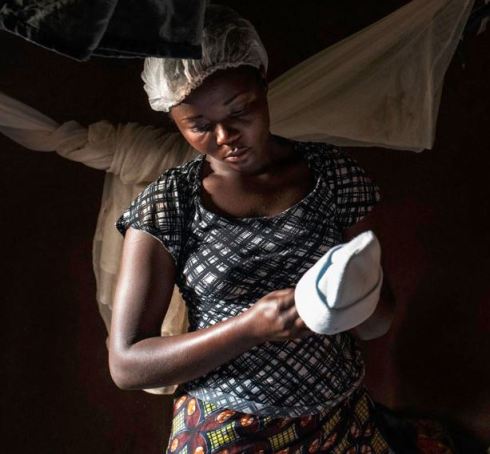
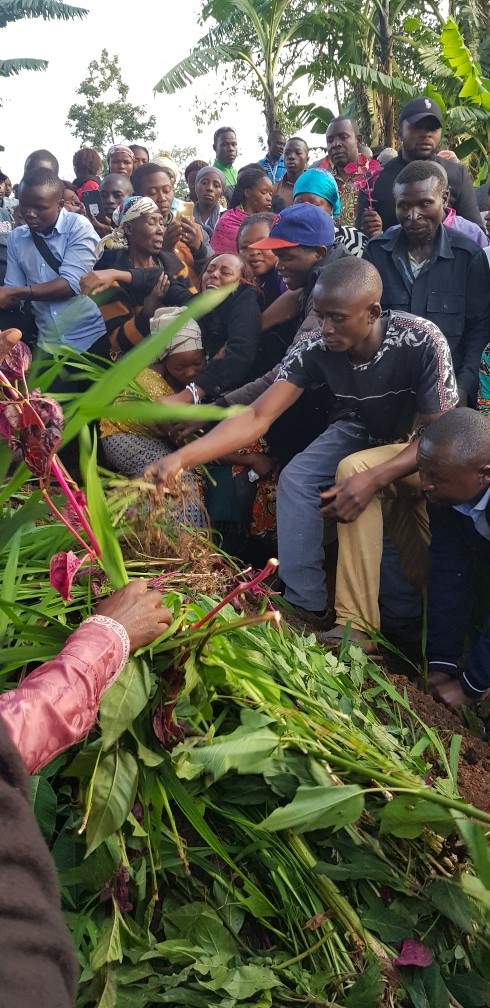
A woman mourns the loss of her baby
Death by Ebola is sudden and always tragic. Family members are left in shock. They are unprepared for what happens next.
The usual mourning practice includes having the body returned home for final farewells. As in most cultures, touching the body of a loved one while saying last goodbyes is common. Following a period of viewing, family members decide where the burial should take place and family members arrange for the grave digging and burial ceremony.
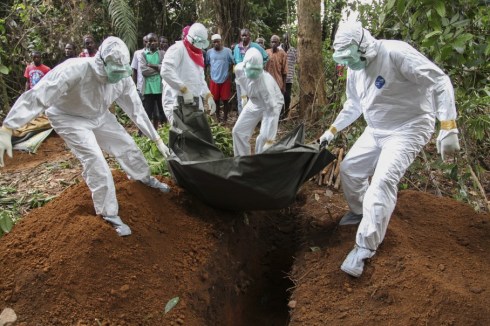
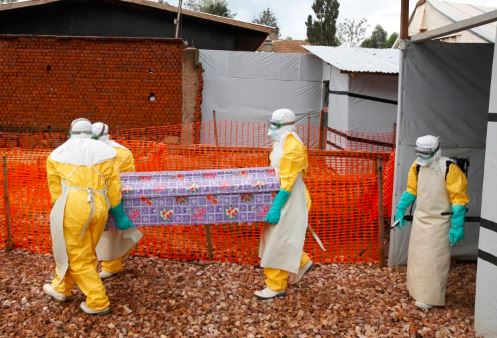
None of that happens when death is caused by Ebola. A dead body infected by Ebola remains a highly contagious body. As a result, family is kept away from the body and has no chance to personally say goodbye up close. Armed soldiers and gloved or gowned medical personal carry the body to a site away from others and not chosen by family. Even at the grave site, family members are kept back.
Understandably, this is difficult for the grieving family. As a result, multiple burial teams have come under attack by rock throwing crowds and the need for police and armed escorts has increased.


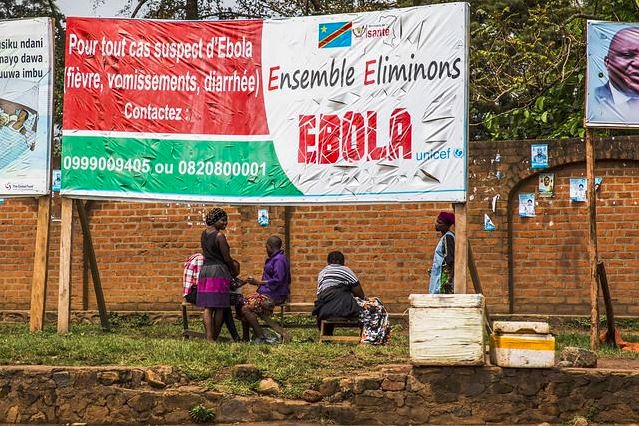
For the last month, the story remains the same terrible story. Many continue to die from Ebola. Health workers continue to be threatened either by people with irrational fears based on ignorance about Ebola or by people with evil intentions who understand Ebola well.
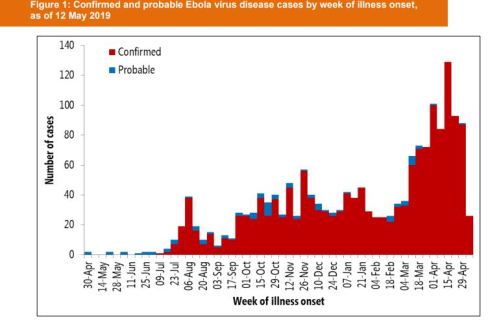
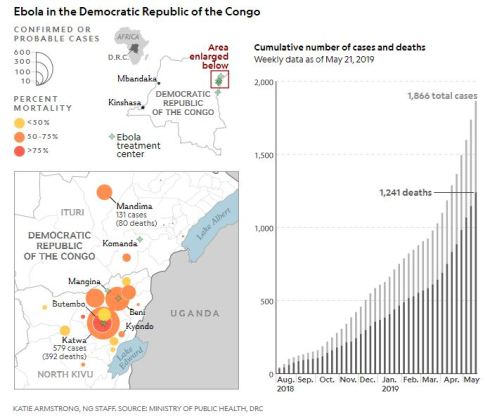
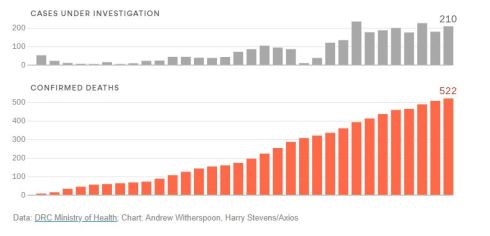
The WHO reports that 1,124 people have died from 1,705 reported cases. This is a mortality rate of 66%. When comparing the above graph to earlier versions, it is apparent that there is a two week lag in the reporting of new cases, so the frequency of cases is not yet declining. In fact, when comparing the absolute numbers of cases being reported biweekly, the incidence of disease appears to be on the rise.
Perhaps the only good news at this time is that the disease has not spread outside of eastern Congo. But based on the dispersion map of where cases are found, it seems clear that people are transmitting it around the area of northern North Kivu and southern Ituri provinces. It may be just a matter of time before it spreads into neighbouring Uganda.

The WHO has made available an excellent English summary report that can be found here: https://reliefweb.int/sites/reliefweb.int/files/resources/SITREP_EVD_DRC_20190514-eng.pdf

Arabic news agency Aljazeera reports that ISIS (or ISIL) has claimed it’s first attack in Congo as three people (two Congolese soldiers and a civilian) were killed in a gunfight near Beni. ISIS further declared the area to be the “Central Africa Province” of the “caliphate”.
https://www.aljazeera.com/news/2019/04/isil-claims-dr-congo-attack-190419064213626.html
Previous and extensive reports of Islamic terrorism in the area have centred on a group known as the ADF. In all probability, the recent attack was conducted by ADF but ISIS is taking credit due to their additional assistance to the ADF in some manner.
The Ebola outbreak is definitely not over even though the WHO recently declared that the outbreak “does not pose a global threat since the deadly virus has not crossed any international borders”. That seems like a strange and purposefully optimistic criteria at a time when reported cases and deaths continue to climb.
Dorcas Mbambu contacted me with her concern that an Ebola case was reported immediately next to the orphanage of 60 children. I have been sent multiple photos of loved ones now dead from the disease. Statistics (several contradictory) can try to reflect reality but surely we can’t grasp the fear and emotions of those forced to live through this outbreak.

Ebola cases by week – April 9, 2019 (New York Times)
The above graphic indicates that Ebola cases are declining, but when this graphic is compared to earlier graphics from the same source, it appears that there is a lag in reporting cases.


Katwa is just a few kilometers east of Butembo.


Congolese know who Robert Kidiaba is. As a star goalkeeper, he played in 11 FIFA World Cup qualifying matches for Congo, but he may be most famous for his celebratory bum dance. He was elected as a Member of Parliament for Upper Katanga province in the latest general elections.
Our first involvement in Congo, with Healing Streams, was designed to assist those traumatized by rape, in part because rape was being used as a weapon of war. Tragically, the persistent attacks on Ebola treatment centres now may have the same purpose.

Soldiers likely posing for the camera in front of a burnt out treatment centre
Multiple violent attacks on Ebola treatment centres continue to occur. A police officer and a health care worker were just killed by such an attack. Doctors Without Borders have been removed until security improves, but local workers have no one to rescue them. Some reports have claimed that the attacks are by disgruntled relatives, unable to visit their loved ones, upset that their possessions are being doused with chlorine. But the flying bullets indicate that armed rebels groups, this time identified as the Mai Mai, have been responsible.
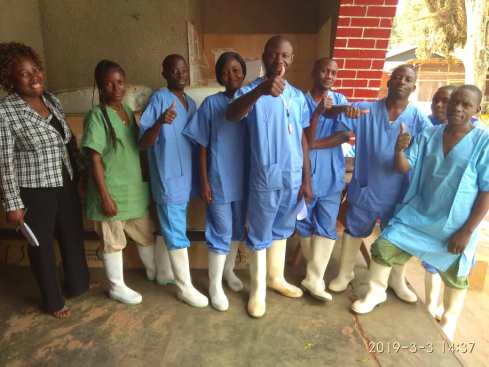
Hero medical personnel in Butembo after an attack
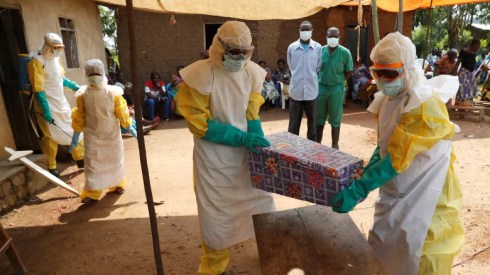
Ebola victims are disproportionately children
The Ebola epidemic is now the second worst in history, but attacks on treatment centres and the fact that many recent victims had not been quarantined leaves open the fear of further spreading. Some tribal groups, thankfully not in this specific region, have a traditional burial custom of mourning a loss by prostrating themselves on the deceased. Education levels and basic hygiene as practiced by many leave a lot to be desired.

The good news is that the number of reported cases has recently been declining.
Nancy Wood reports that all human traffic in and out of Bunia is subject to a hand washing barrier. There have been no further Ebola cases confirmed in a month in Bunia. The area of concern is the more southern centres of Beni and Butembo. But the recent attacks on health workers could allow the Ebola epidemic to persist.
Politics will definitely be different in Congo now. Felix Tshisekedi has been sworn in, most nations are accepting his victory, the objections of his disgruntled opponent Martin Fayulu are being ignored and there seems to be peace.
During the inauguration ceremony, there were fears that Tshisekedi had a medical emergency but it turned out that the flak jacket he was wearing was too tight.

Kabila wraps the presidential sash around Tshisekedi
Joseph Kabila deserves a lot more credit than he is receiving. He has successfully presided over a mainly peaceful and voluntary handover of power. In Congo as well as the vast majority of African countries, this is no small feat.
For the first time, Congo will have the challenge and the benefit of political checks and balances with Kabila supporters controlling the National Assembly and therefore control of the government but not the presidency. This could result in political gridlock but it could also act as a beneficial limiting factor concerning corruption.
The constitutional court has ruled that Felix Tshisekedi will be the president of Congo. This was the final recourse for peaceful objections to his victory. The Internet has been restored after being shut down across the country for 20 days. For the good of the nation, this is the point that opposition to Tshisekedi should end.
But personal glory and benefits unfortunately outweigh any concept of for the good of the nation for Martin Fayulu as he has self declared himself to be the president.
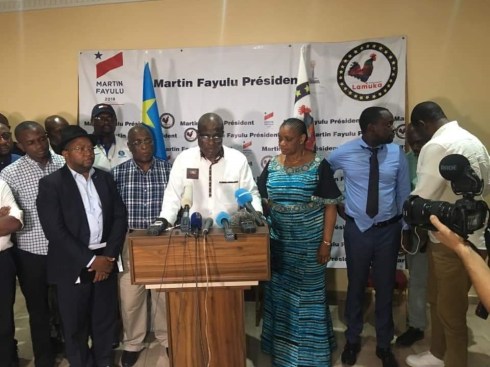
This can only be bad news. Unless there is a prompt political solution, there is going to be violence and instability until this is resolved. Unfortunately for Fayulu, his opponents are both in control of the army, not him. Tshisekedi has de jure control of the army by virtue of being President. It remains to be seen whether Kabila has de facto control, but in either event Fayulu certainly doesn’t have any control of the army so it hard to see how he will achieve power.
In the 2000 U.S. presidential race, results in Florida were close, disputed and forced a delay before the declaration of George Bush as president. America didn’t know who was their president-elect. We now have a similar situation in Congo.
Candidate Martin Fayulu is contesting the results and demanding a hand recount, claiming that Felix Tshisekedi has stolen the election in concert with past President Kabila. The Catholic church supports Fayulu because they claim that their poll monitors determined Fayulu as winner.

Martin Fayulu
I don’t understand how the church could make their claim, which they made before even half the votes were counted, and they were observers not members of the Electoral Commission. This seems to be a case of Fayulu grasping at straws, because why not?
Polls may have had Fayulu slightly ahead of Tshisekedi but Tshisekedi’s victory was clear and not that out of line with polling. Does anyone remember Donald Trump’s victory? Can you imagine the challenges for good polling in Congo? We talk about LIV’s, Low Information Voters. Can you imagine the situation of LIV’s in Congo? In the Congo environment, think of how important name recognition would be for a huge portion of voters. Tshisekedi’s father Etienne iconically represented the opposition to Kabila for decades. That name recognition benefit for Felix Tshisekedi could easily explain the gap in polling to the actual results.
An interesting development is that control of the National Assembly has been retained by members associated with Kabila. This will be a thorn in the side of Tshisekedi (or Fayulu). A review of the country’s governance, which is more similar to France than the U.S. or Britain, is in order.
From Wikipedia: The government is composed of a cabinet of ministers, deputy-ministers (vice-ministers), and occasionally state-ministers (which is a senior personal honorific title). The number of these ministers vary from one government to the next. The cabinet is headed by the Prime Minister, also known as the head of government, appointed by the President, from the political party, the group or the coalition that holds the majority of seats in the National Assembly. In the Democratic Republic of the Congo, the cabinet is more commonly simply referred to as The Government. The government is the effective executive arm of the state, in charge of all the country’s main administration, in all the domains reserved to the central government by the constitution, and in all the domains in which the central government has concurrent jurisdiction with the provinces.
The summary is that the cabinet, headed by the Prime Minister runs the government and legislature, not the President. The President is all powerful when his party also controls the National Assembly. While President Elect Tshisekedi will pick the Prime Minister, the Prime Minister will be a member of a competing party loyal to Kabila. I smell political intrigue ahead! In our current situation, the key power of President Elect Tshisekedi will be veto power over legislation and control of the Army. Although a President picks a Prime Minister he can’t dismiss a Prime Minister.
I expect that we will be learning a lot more about the intricacies of the Congo constitution in the near future. Unfortunately for Tshisekedi, a key criticism of him is his lack of experience which could become fatal given his need to maneuver politically with an unfriendly opposition party effectively in control of the government. Fayulu is claiming that (behind the scenes) Kabila believes he can control Tshisekedi easier than Fayulu is these circumstances and that’s how and why Tshisekedi was elected.
Fortunately, the country is currently at peace as the vast majority are just happy to know the Kabila will no longer be president. Stay tuned, as the process of reviewing the hanging chads and confirming the validity of the declared victor, will likely be underway for some time yet.
 Bens in Congo