
You are currently browsing the category archive for the ‘Uncategorized’ category.
We seeded a microfinance program last summer with James Kataliko overseeing the applications and financial management.
The take up has been modest but successful and worthwhile. The first two loans have already been repaid in full with interest.
Masika is selling soap and she used her loan to increase her purchases and inventory. This stimulated her sales and she tells us that the loan enabled her to buy a motorcycle which facilitates the transfer of soap to the markets. School fees for her children have been paid up (a big deal!) and she handled an unexpected medical bill. When James followed up with her, she indicated that she would like to have another loan. With her track record, absolutely!
Kavugho produces and sells colourful hats, as noted in an earlier blog post. This post was noticed by a reader in Canada who noticed that Kavugho was wearing a hat with the same colours as their university football team (the Guelph Gryphons). After a flurry of messages, we found someone willing to bring a box of hats back with them to their home in Montreal, Quebec. Still 600 kilometers to go, but shipping within Canada is vastly cheaper than from Congo! Kavugho’s husband is unemployed after rebels looted the property of his employer, so the successful sale of hats is critical for her family. She is now maintaining higher inventory levels and has also been able to pay the school fees for her two daughters.
It’s not a co-incidence that these stories both involve women as microfinance projects typically are predominantly female throughout Africa. Visit a market and you’ll notice that a large majority in the stalls are women. 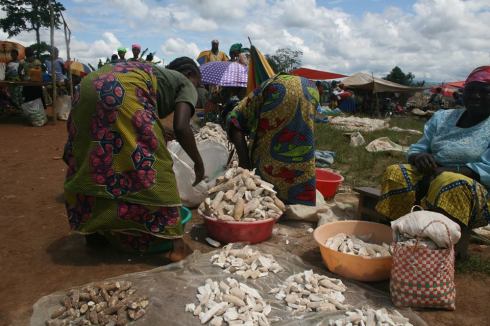
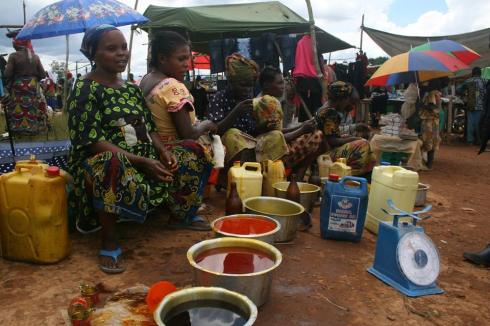
About 200,000 people have been displaced in ethnic clashes since mid-December in the northeastern Ituri province of the Democratic Republic of Congo, as escapees spoke of burnt villages and victims being hacked to death. Ituri province is just north of North Kivu. https://www.independent.co.ug/200000-displaced-ethnic-clashes-dr-congo-sources/
Hema herders and Lendu farmers have been locked in violence in Ituri for decades, with tens of thousands killed from 1999 to 2003.
In 1999 a fight over land rights in the gold-rich province drew in militias and led to 60,000 deaths and about 600,000 people displaced, according to Human Rights Watch. The conflict led to the deployment of a European Union peacekeeping force in 2003.
Another humanitarian source said “on an average 800 people are arriving daily” in Bunia, the main city in the region, due to the fighting. “Since mid-December about 200,000 people have been displaced in Ituri due to the violence,” the first humanitarian source said.
The UN in Kampala meanwhile said over 22,000 refugees had fled to Uganda recently to escape violence has left several dead and villages torched. At least four refugees drowned while crossing the waters of Lake Albert between the two nations, the UN refugee agency, UNHCR, said, expressing concern.
“Last week, over 22,000 Congolese crossed Lake Albert to Uganda in three days, bringing the total number of people from the DRC arriving in the country to about 34,000 since the beginning of the year,” UNHCR said Tuesday. “The refugees use small canoes or overcrowded and rickety fishing boats, often carrying more than 250 people and taking up to 10 hours to cross.”

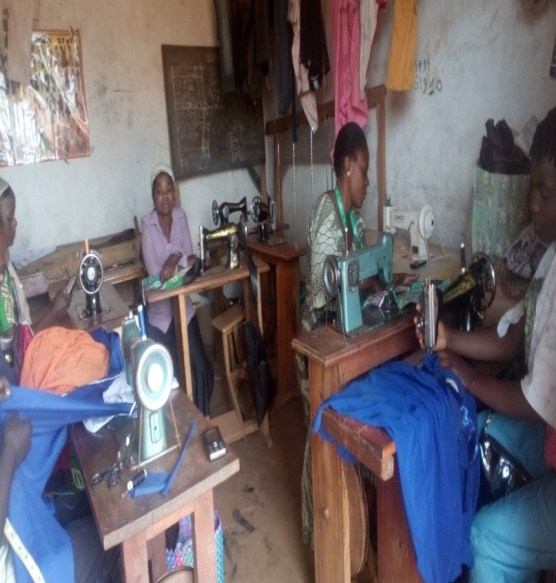
Dorcas Mbambu at CED (Compassion for Children in Distress) reports that the sewing centre had been shut down over fears related to “the possible incursion of bandits”. In the same manner, the water filter project continues to be halted due to issues of physical security in Butembo.
In discussions with a UK partner working with Dorcas, we heard how they were visiting the orphanage and could hear the violence next door to where they were staying. Bandits had realized that white Europeans were visiting and they must have brought money. The treasurer was being robbed and roughed up, even though he didn’t in fact have any money. As mentioned before, Congo desperately needs two foundational things: physical security and the rule of law.
Recently, some local church sponsored schools have been able to place some orders for children uniforms which enabled CED to purchased a used but relatively modern sewing machine.

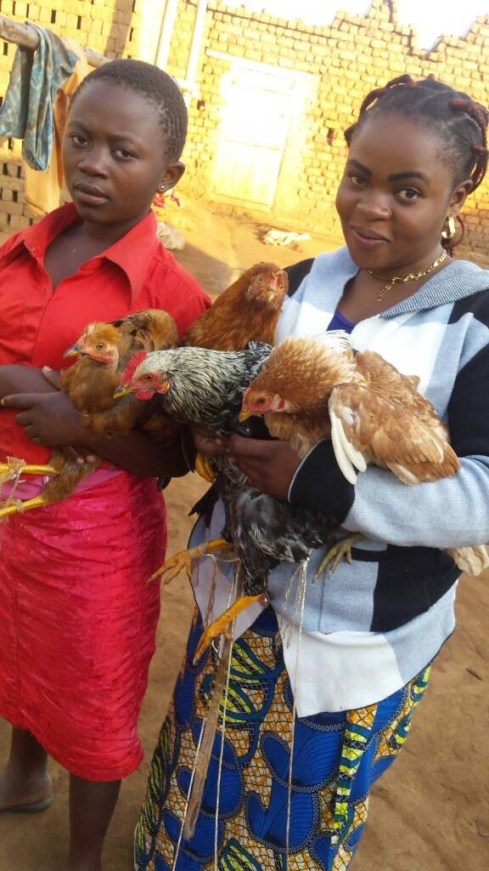
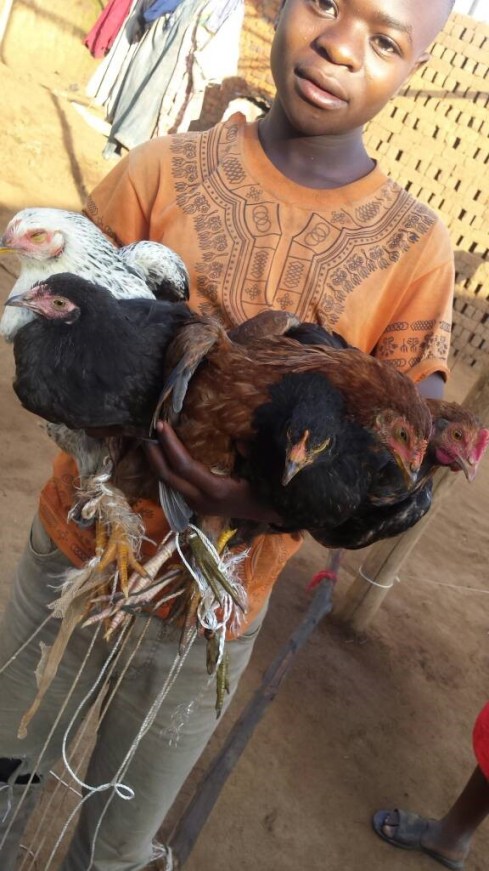
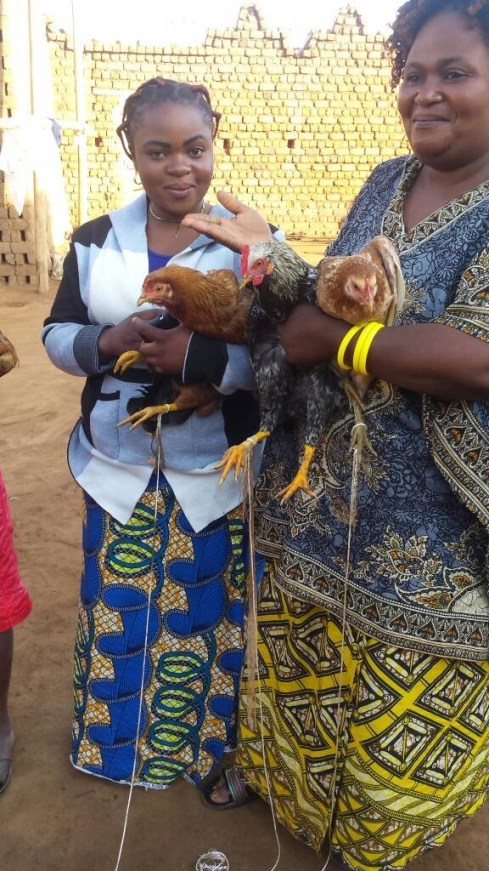
One of our sponsored projects is named “Kuku yangu, tenga yayi!” which translates to “My chicken, give me eggs!”. You can see a brief video here. The microfinance project provided twenty families with two chickens each (a rooster and a hen) and the obligation to return two chickens to the community to then be shared with another family.
The villagers in Kalondo have been frightened by roving rebels and FARDC soldiers who have no hesitation to help themselves to chickens and other villager possessions. As a result, there recently was a large evacuation of chicken to another village considered to be safer.
No word on evacuating the children.

UN peacekeepers (MONUSCO) suffered their deadliest loss ever in Congo on December 7, 2017. With 14 killed and 50 wounded, it was the worst attack on UN peacekeepers anywhere in the world since 24 Pakistani peacekeepers were killed in Mogadishu, Somali in 1993. The dead soldiers were from Tanzania.
The attack happened 45 km north-east of Beni on the Semuliki River, within the famed Virunga national park near the Ugandan border. It was at a river crossing on the Mbau-Kamango road which is an important access road to Uganda.
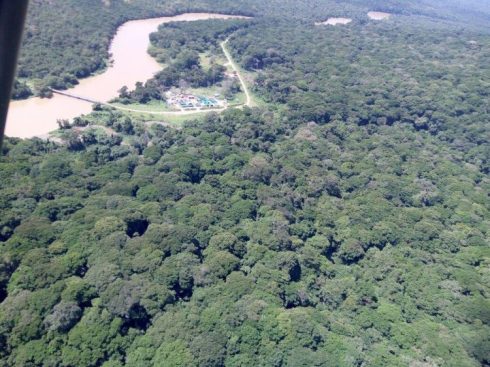
MONUSCO camp at the Semuliki river (from Congo Research Group)
Reports indicate that the severity of the attack was a surprise, as weaponry and persistence of the attackers was far beyond what the UN has seen before. This is creating speculation of how the Islamic ADF, believed to now be a weakened group, could have pulled this off without additional support from other players. The camp pictured above was attacked from three sides and was cut off from help for 12 hours, even though a FARDC (Congo army) camp was only 15 km away. There will be much soul searching at the UN now. Jason Stearns at the Congo Research Group has an excellent account of the tragedy: http://congoresearchgroup.org/monusco-suffers-the-worst-attack-in-its-history/

14 Tanzanian peacekeepers honoured by the UN
Understanding the motive and future capabilities for such an attack will be important. Was it effectively Islamic terrorism by the ADF? Was it directed at the UN or are there greater aims of undermining the stability of the national Congo government given the uncertainties related to a delayed presidential election. President Joseph Kabila’s father Laurent-Desire gained power in 1997 until his assassination in 2001 through unrest that was fomented in eastern Congo after the Rwandan genocide crisis.

Dorcas amid orphans
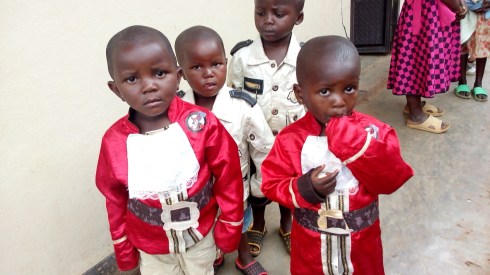

Can you imagine arranging the photo shoot?

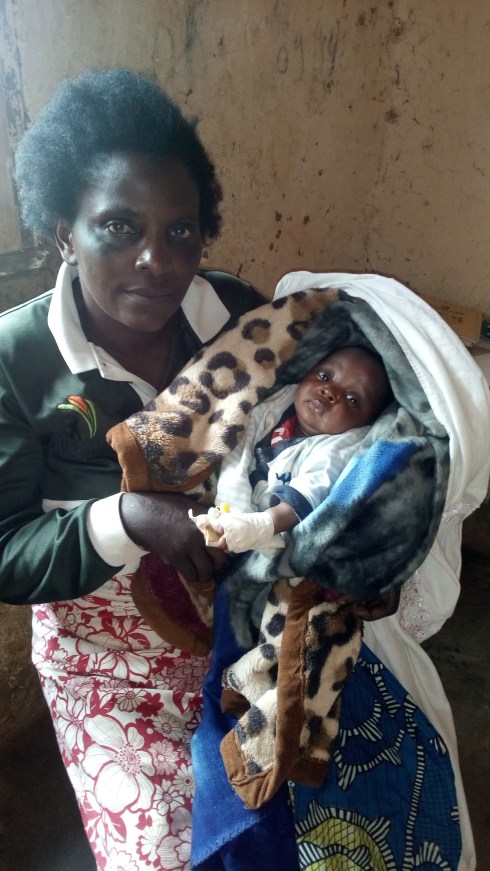
Many orphans arrive needing immediate significant medical attention
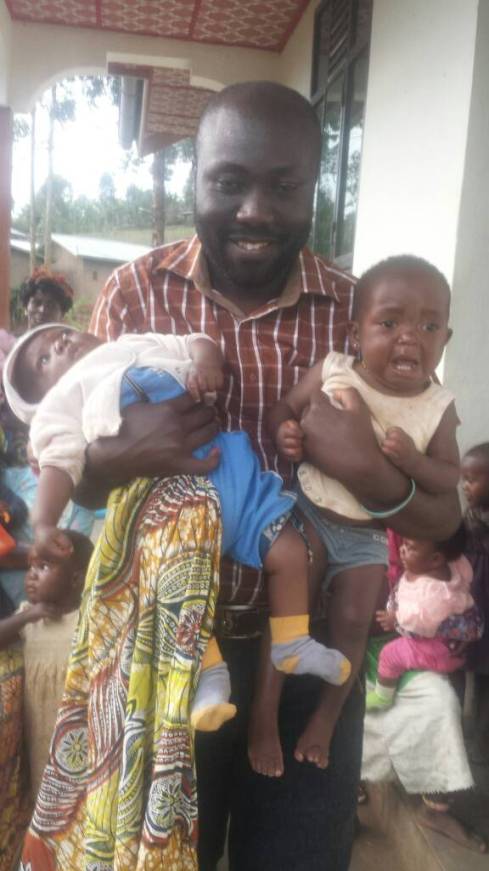
James Kataliko holding Michael and Brenda who were named in our honour. They both needed medical care on arrival.

There are many faithful women who support Dorcas at the orphans. They are unsung heroes.
IRIN has prepared an excellent analysis of the turmoil in North Kivu. It is consistent with first hand reports from Dorcas and James of economic difficulties, safety concerns, and continued flow of new orphans generated from physical violence. I found the IRIN report interesting for being able to quantify the staggering economic impact on the agriculture sector in Congo of $1.9 billion over three seasons. Congo will not see prosperity without physical security and a rule of law.
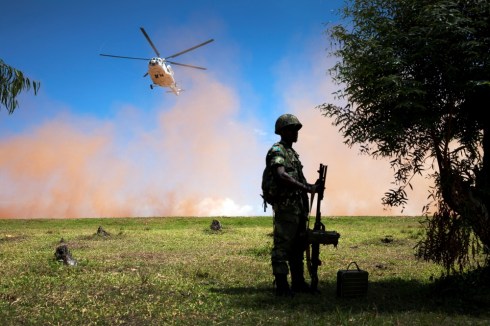
A group, calling itself the National Movement of Revolutionaries (MNR), has been attacking villages and towns since June. Speaking on the UN’s Radio Okapi in July, North Kivu Governor Julien Pulaku said recent attacks appeared to be beyond the capabilities of local Mai-Mai groups and that a new rebellion was emerging. The goals of MNR appears to include destabilizing DRC and overthrowing President Joseph Kabila.
When the Mai-Mai launch attacks, “they only resist the army’s firepower for 30 or 40 minutes. What we are seeing today is that the alleged Mai-Mai are resisting for one or two or three hours and plan attacks on three, four, or five locations within a month. This suggests a supply of munitions and heavy weapons.”
However, government spokesman Lambert Mende told IRIN the attacks claimed by MNR are the work of bandits. “They are only there to loot people and our natural resources. That’s why we take this opportunity to warn them. Whatever their demands, whatever their origins, whatever internal or external support they have, there is no more time for negotiation,” said Mende.
The escalation of attacks on army positions in North Kivu followed the 11 June escape by more than 900 detainees from Kangabyi central prison in the town of Beni – many of whom are thought to have since joined the MNR ranks.
The MNR was one of several groups to claim responsibility for these attacks, including one on the village of Kabasha, which lies on the road between Butembo and Beni, the main towns respectively in Lubero Territory and Beni Territory (the most heavily populated territories in North Kivu Province). In that incident, several members of the Intervention Brigade, a special unit of the UN’s peacekeeping mission, MONUSCO, were wounded when they came to the army’s aid.
According to Omar Kavota, director of the Study Centre for the Promotion of Peace, Democracy and Human Rights, the MNR is a “new rebellion politically coordinated by people who want to overthrow the republic’s institutions.
Kavota said he believed the MNR encompasses a range of different Mai-Mai groups as well as fighters from: the Allied Democratic Forces, a rebel group based in the Ruwenzori mountains (close to the border with Uganda), from where its leadership originates; the Democratic Forces for the Liberation of Rwanda, an armed group founded by key perpetrators of the 1994 genocide in Rwanda; and remnants of the M23, a rebel group that was prominent in North Kivu in 2012-2013.
MNR spokesman Apipawe said the insurgency only enjoyed support from within Congo and the Congolese diaspora. He insisted it had no links with the M23, the ADF, the FDLR, or any other groups, and said it “cannot collaborate with them” as their “sole aim is to perpetuate Joseph Kabila’s regime”. “We have key bases in North Kivu in Beni, Lubero, and Nyamilima. Since we are a movement with national aspirations, we will progressively reach other provinces in Congo, as a prelude to launching [major] actions. I cannot say when, but it will be soon,” he told IRIN.
The administrator of Lubero Territory, Djoy Bokele, told IRIN that many farmers had abandoned their harvests to escape the fighting, leading to a shortage of staple foods. “A sack of cassava that used to sell for 25,000 Congolese francs ($16) now goes for 80,000,” he said.
In Beni Territory, the emergence of a new rebellion would only worsen a three-year food crisis that began with a series of attacks against civilians blamed on the ADF.
These attacks have led more than 81,000 commercial farmers to abandon their fields and to a total revenue loss of some $1.9 billion over three agricultural seasons, according to the Congolese League of Women Peasant Organisations (LOFEPACO). “That’s equivalent to a quarter of the annual national budget, one and a half times MONUSCO’s annual budget, and about the equivalent the country’s entire food imports every year,” explained LOFEPACO agronomist Patient Mapendo.
Meanwhile, the Congolese Institute for the Conservation of Nature (ICCN) has cut staff building a major hydroelectric plant in Lubero, a key element of the region’s economic development. “Following [this] insecurity, there will be less investment in the region and fewer jobs and lower incomes,” ICCN spokesman Joël Wengamulay told IRIN.
Whether it’s a major new grouping or, as the army insists, only local Mai-Mai groups who are behind the latest violence in North Kivu, the economic and humanitarian consequences have been considerable.
Georges Katsongo, who coordinates civil society groups in Lubero Territory (almost all parts of which have been affected by the violence), told IRIN that more than 23,000 people have been displaced and are now living without assistance among host families in five towns. “Homes have been torched, women raped, schools and health centres systematically destroyed,” he said.
Only two years late, but the election date has finally been set by the Electoral Commission. This body presumably had the approval of President Kabila prior to the announcement. He has otherwise continued to be quite quiet about his future intentions. To be fair to him, the examples of successful presidents in Africa voluntarily giving up power are very sparse.
U.S. ambassador Nikki Haley last month said during a visit to Kinshasa that elections needed to be held by the end of 2018 or Congo would lose international support. It’s unknown how influential this pressure was on the election call but since Kabila was opening talking about a 2019 election, Haley’s tougher talk likely had an impact.
Meanwhile, Congolese can legitimately wonder what difference an election will make in their lives. To be sure, there is much more stability compared to 12 years ago, but the government has not yet rooted out all the violence. Dorcas is still taking in orphans. In her latest message with my translation: We are in the hospital today with the new cases of 3 month old twins. As they were nursing with their own mums before arrival, it is now very difficult for them to take the milk bottle. We have to make sure that we can nurture the orphans for their growth, teach them a holistic life and put them back into their own families or communities. Pray for us because the service is very heavy.
I generally prefer Congo to be out of the news as most news is bad news. Beyond the ongoing confirmation of the general election being delayed, three items caught my attention this week. All made my heart sink for the people of Congo.
Seventy-eight homes were burned down in remote northeast Democratic Republic Congo in a feud between two villages over accusations of mass poisoning, a local leader said Monday. Men from the village of Umoyo last Tuesday ransacked the village of Jupanduru and torched 78 homes, said Jean-Pierre Ukethmwu, a local chief. “The situation here in Jupanduru is dramatic. The village’s two schools are afraid of opening and the population has fled,” he told AFP. The two villages lie in the district of Mahagi, about 200km north of the Bunia, a city lying on DR Congo’s troubled eastern border with Uganda. Ukethmwu said villagers in Umoyo suspected people in Jupanduru of having poisoned food that was served for a wake. Two people reportedly died and 32 needed hospitalisation. http://www.thesundaily.my/news/2017/10/16/homes-torched-village-feud-dr-congo
A woman in the Democratic Republic of Congo was publicly raped, whipped and decapitated in front of a cheering crowd after serving ‘forbidden fish’ to a group of anti-government rebels, who later drank her blood. The woman being punished was accused of serving forbidden fish to rebels who visited her restaurant. ‘They said she gave them beans that contained pieces of a small, local fish,’ a Luebo resident told France 24. The resident added: ‘Convinced that she had broken their protection charms, the council of rebels led by a man named Kabata sentenced both the woman and the son of her husband’s second wife [the young man was also working there that day] to commit incest in public.’ Rebel leaders force the woman to have sex with the son of her husband’s second wife, and another woman is seen whipping the pair with branches. The killing sparked violence that has escalated, including gross alleged violations such as rapes, torture and the use of child soldiers. Refugees have given harrowing accounts of the violence in the central region, which the UN warned had taken on ‘an increasing and disturbing ethnic dimension’. http://www.dailymail.co.uk/news/article-4965886/Woman-executed-rebels-Democratic-Republic-Congo.html
Video has emerged of Arabic speaking men with machine guns calling for jihad in Congo, something the population just doesn’t need right now. While the ADF is an Islamic group that has been creating trouble for some time, this is the first video purposely and unabashedly distributed by Muslims calling for jihad in eastern Congo from within Congo. It was produced by a group known as Madinat Tawhis wa-l-Muwahdin (MTM – the city of monotheism and monetheists). The nearby Virunga National Park has been sheltering rebels of all kinds for years and the MTM are believed to be active in Virunga now, likely invited by and working with the ADF. htttp://www.politico.cd/actualite/la-une/2017/10/15/video-attribuee-groupe-etat-islamique-appelle-djihad-lest-de-rdc.html#c8MTI11fLIRdlWRA.99
The peaceful transition of power is always a serious issue, but especially in Africa where it is a rare event. President Joseph Kabila’s second elected term officially ended in December 2016 yet he remains in power without having called an election as the constitution mandates. It now appears that the government will claim that an election cannot take place until the end of 2018, at the earliest. This will likely result in additional widespread discontent and violence as Kabila will remain president by political inertia.
The government has been claiming that the process of creating a proper voter’s lists and democratic process in Congo is beyond their capabilities of arranging without substantial foreign financial aid. There are estimates of a general election costing $526 million to conduct which sounds absurd in a country where earning $1 a day is an above average wage. Registration efforts, proper handling and distribution of ballots and voter security are the major costs. While there clearly are a lot of expenses and challenges to conduct an election in a country lacking basic infrastructure there is also a lot of manipulation of foreign donors going on. A billion people in India always seem to vote with minimal incidents.
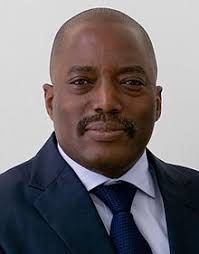
President Joseph Kabila
Kabila’s opponents have long suspected he intends to repeatedly delay elections until he can organize a referendum to let himself stand for a third term, as his counterparts in the neighbouring Congo Republic and Rwanda have done.
Kabila denies those accusations, saying the election delays stemmed from budgetary constraints and the challenge of registering millions of voters. Congo is moving toward “credible, transparent and peaceful elections,” he told the United Nations last month.
 Bens in Congo